Assam’s Growing Cancer Challenge: A Wake-up Call For Public Health Reform
Introduction Cancer in Assam has become a serious public health concern. The number of cancer cases is rising every year, and many patients are diagnosed very l
Quickobook EditorialGeneral health information — not yet medically reviewed
This article is for health awareness only. It does not replace a medical consultation. For emergency symptoms, visit the nearest emergency department.
1What this means
Introduction Cancer in Assam has become a serious public health concern. The number of cancer cases is rising every year, and many patients are diagnosed very late. This makes treatment harder and survival lower. Assam, a northeastern state of India, already faces challenges like poverty, rural living, and limited healthcare access. Cancer has added another heavy burden.
2Causes and risk factors
This situation is a wake-up call for public health Assam. Strong reforms are needed now. With better awareness, early detection, and stronger health systems, many cancer deaths can be prevented.
3Symptoms to notice
This guide explains why cancer is growing in Assam, who is most at risk, and what steps can protect lives.
Get urgent care if symptoms are severe
Severe pain, breathing difficulty, fainting, bleeding, confusion or rapidly worsening weakness should be treated as urgent.
4Tests and diagnosis
Overview: Why Cancer Is Rising in Assam Assam has one of the highest cancer rates in the country. Head and neck cancers are especially common. Oral cancer, throat cancer, and esophageal cancer are seen far more often than in many other states.
5Care and next steps
Key reasons include high tobacco use, alcohol intake, poor diet, infections, and delayed medical care. Many people live far from cancer hospitals and reach doctors only when symptoms are severe.
6Care and next steps
Cancer in Assam is not just a medical issue. It reflects deeper problems in education, lifestyle, and public health planning.
7Care and next steps
Major Causes of Cancer in Assam Tobacco Use Tobacco cancer is the biggest cause. People consume tobacco in many forms:
8Care and next steps
Gutkha and khaini
9Care and next steps
Chewing tobacco with betel nut
10Care and next steps
Cigarettes and bidis
11Care and next steps
Chewing tobacco damages the mouth and throat. This leads to oral cancer, lip cancer, and throat cancer. Tobacco also increases lung cancer risk.
12Care and next steps
Betel Nut (Areca Nut) Betel nut chewing is common and socially accepted. It damages mouth tissues and increases cancer risk, especially when mixed with tobacco.
13Care and next steps
Alcohol Consumption Alcohol irritates the food pipe and liver. When combined with tobacco, cancer risk becomes much higher.
14Care and next steps
Poor Diet and Nutrition Low intake of fruits and vegetables reduces protection against cancer. Many families cannot afford balanced diets.
15Care and next steps
Infections Certain infections increase cancer risk:
16Care and next steps
HPV infection can cause oral and cervical cancer
17Care and next steps
Hepatitis B and C can lead to liver cancer
18Care and next steps
Environmental and Occupational Risks Pesticide exposure and polluted water sources may also play a role, especially in rural areas.
19Care and next steps
Common Symptoms People Ignore Many cancer patients in Assam ignore early signs. Common warning symptoms include:
20Care and next steps
Mouth sores that do not heal
21Care and next steps
White or red patches inside the mouth
22Care and next steps
Difficulty swallowing
23Care and next steps
Long-lasting cough
24Care and next steps
Unexplained weight loss
25Care and next steps
Persistent fatigue
26Care and next steps
Lumps in neck or breast
27Care and next steps
Early symptoms are often painless. This causes dangerous delays.
28Care and next steps
Diagnosis Challenges in Assam Late Detection Most patients are diagnosed at advanced stages. Early screening is rare.
29Care and next steps
Limited Screening Programs Regular cancer screening camps are not available in many districts.
30Care and next steps
Distance from Cancer Centers Specialist hospitals are mainly in big cities. Travel costs and time delay diagnosis.
31Care and next steps
Fear and Stigma Many people fear cancer diagnosis and avoid testing. Myths and shame also prevent early care.
32Care and next steps
Treatment Options Available Surgery Used when cancer is detected early and localized.
33Care and next steps
Chemotherapy Medicines that kill cancer cells. Side effects depend on drugs and dose.
34Care and next steps
Radiation Therapy High-energy rays used to destroy cancer cells.
35Care and next steps
Combined Treatment Many patients need surgery plus chemo or radiation.
36Care and next steps
Treatment choice depends on cancer type, stage, age, and overall health. Costs can be high, especially for long-term therapy.
37Care and next steps
Lifestyle Changes That Can Reduce Cancer Risk Stop Tobacco Use Quitting tobacco reduces cancer risk at any age.
38Care and next steps
Reduce Alcohol Intake Lower alcohol use lowers cancer risk.
39Care and next steps
Eat a Balanced Diet More fruits, vegetables, and whole grains protect the body.
40Care and next steps
Maintain Oral Hygiene Good mouth care helps reduce oral cancer risk.
41Care and next steps
Physical Activity Regular movement improves immunity and health.
42Care and next steps
Prevention Strategies for Assam Strong Tobacco Control Ban on gutkha must be enforced strictly.
43Care and next steps
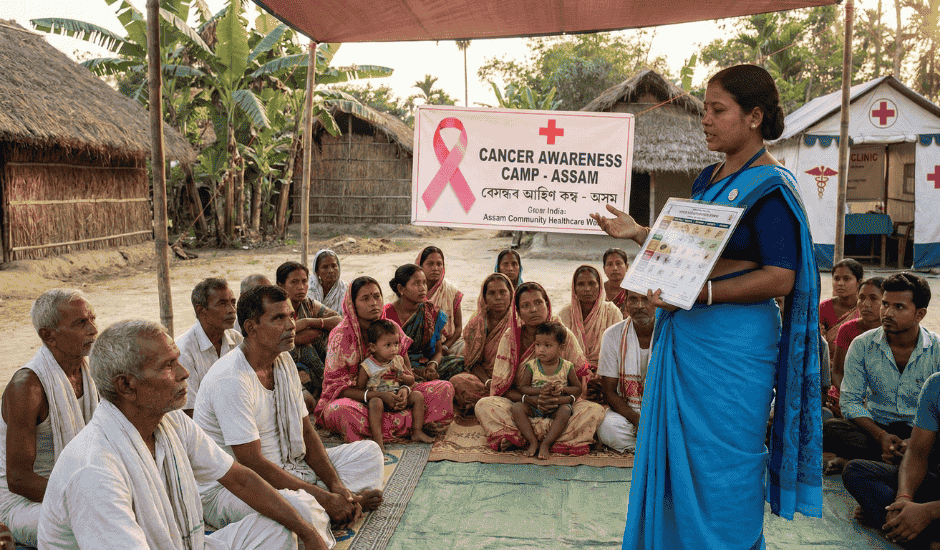
Community Awareness People need simple education in local languages.
44Care and next steps
School-Based Programs Teaching children early helps prevent addiction later.
45Care and next steps
Regular Screening Camps Oral, breast, and cervical cancer screening should reach villages.
46Care and next steps
Vaccination HPV and Hepatitis B vaccines can prevent future cancers.
47Care and next steps
When to See a Doctor You should see a doctor immediately if:
48Care and next steps
A mouth ulcer lasts more than two weeks
49Care and next steps
You notice unexplained bleeding
50Care and next steps
Swallowing becomes painful
51Care and next steps
You feel a lump anywhere
52Care and next steps
Weight loss happens without reason
53Care and next steps
Early care saves lives.
54Care and next steps
Risks and Complications of Late Treatment Late-stage cancer leads to:
55Care and next steps
Lower survival chances
56Care and next steps
More aggressive treatment
57Care and next steps
Higher costs
58Care and next steps
Severe pain and disability
59Care and next steps
Emotional stress for families
60Care and next steps
Early detection reduces suffering and expenses.
61Care and next steps
Role of Public Health Reform in Assam Public health Assam needs urgent reform:
62Care and next steps
More cancer centers in districts
63Care and next steps
Mobile screening units
64Care and next steps
Training for local doctors
65Care and next steps
Affordable treatment access
66Care and next steps
Strong anti-tobacco laws
67Care and next steps
Cancer control must become a priority, not an afterthought.
68Care and next steps
How Quickobook Can Help Quickobook helps patients:
69Care and next steps
Find nearby doctors and hospitals
70Care and next steps
Book appointments easily
71Care and next steps
Reduce waiting time
72Care and next steps
Access healthcare information
73Care and next steps
Early consultation through platforms like Quickobook can prevent dangerous delays.
74Care and next steps
Conclusion Cancer in Assam is a growing crisis, but it is not hopeless. Many cancers are preventable. Many lives can be saved through early detection. This is a wake-up call for public health reform, stronger awareness, and better access to care.
75Care and next steps
With the right policies, education, and community action, Assam can fight cancer more effectively.
76Care and next steps
Frequently Asked Questions Q1. Why is cancer common in Assam?
77Care and next steps
A. High tobacco use, betel nut chewing, and late diagnosis are major reasons.
78Care and next steps
Q2. Which cancer is most common in Assam?
79Care and next steps
A. Oral and head-neck cancers are most common.
80Care and next steps
Q3. Is chewing tobacco more harmful than smoking?
81Care and next steps
A. Yes, chewing tobacco greatly increases oral cancer risk.
82Care and next steps
Q4. Can oral cancer be cured?
83Care and next steps
A. Yes, if detected early.
84Care and next steps
Q5. What are early signs of oral cancer?
85Care and next steps
A. Mouth ulcers, white patches, and pain.
86Care and next steps
Q6. Does betel nut alone cause cancer?
87Care and next steps
A. Yes, long-term use increases risk.
88Care and next steps
Q7. Are women at risk too?
89Care and next steps
A. Yes, especially for breast and cervical cancer.
90Care and next steps
Q8. Can cancer be prevented?
91Care and next steps
A. Many cancers can be prevented with lifestyle changes.
92Care and next steps
Q9. Is cancer treatment expensive?
93Care and next steps
A. It can be costly, especially at late stages.
94Care and next steps
Q10. Does quitting tobacco help after years of use?
95Care and next steps
A. Yes, risk reduces over time.
96Care and next steps
Q11. Are cancer screenings painful?
97Care and next steps
A. Most are simple and painless.
98Care and next steps
Q12. What age should screening start?
99Care and next steps
A. It depends on cancer type and risk factors.
100Care and next steps
Q13. Is cancer contagious?
101Care and next steps
A. No, cancer does not spread person to person.
102Care and next steps
Q14. Can poor diet cause cancer?
103Care and next steps
A. Poor nutrition increases risk.
104Care and next steps
Q15. Does alcohol alone cause cancer?
105Care and next steps
A. It increases risk, especially with tobacco.
106Care and next steps
Q16. Are rural people more affected?
107Care and next steps
A. Yes, due to limited healthcare access.
108Care and next steps
Q17. Can HPV cause cancer?
109Care and next steps
A. Yes, HPV can cause oral and cervical cancer.
110Care and next steps
Q18. Is vaccination helpful?
111Care and next steps
A. Yes, vaccines prevent certain cancers.
112Care and next steps
Q19. Do all cancers cause pain?
113Care and next steps
A. No, early cancer may not hurt.
114Care and next steps
Q20. Why do people delay treatment?
115Care and next steps
A. Fear, cost, and lack of awareness.
116Care and next steps
Q21. Can cancer come back after treatment?
117Care and next steps
A. Sometimes, regular follow-up is needed.
118Care and next steps
Q22. Is traditional medicine enough?
119Care and next steps
A. No, medical treatment is essential.
120Care and next steps
Q23. Can stress cause cancer?
121Care and next steps
A. Stress alone does not cause cancer.
122Care and next steps
Q24. Are children affected by cancer?
123Care and next steps
A. Yes, but it is less common.
124Care and next steps
Q25. Does family history matter?
125Care and next steps
A. Yes, genetics can increase risk.
126Care and next steps
Q26. Can pollution cause cancer?
127Care and next steps
A. Long-term exposure may increase risk.
128Care and next steps
Q27. Is cancer always fatal?
129Care and next steps
A. No, many people survive cancer.
130Care and next steps
Q28. Can early cancer be cured fully?
131Care and next steps
A. Yes, many early cancers are curable.
132Care and next steps
Q29. Are free cancer services available?
133Care and next steps
A. Some government schemes provide support.
134Care and next steps
Q30. Should mouth sores be checked?
135Care and next steps
A. Yes, if they last more than two weeks.
136Care and next steps
Q31. Can diet improve recovery?
137Care and next steps
A. Yes, good nutrition supports healing.
138Care and next steps
Q32. Are men more affected than women?
139Care and next steps
A. Certain cancers are more common in men.
140Care and next steps
Q33. Does smoking bidis cause cancer?
141Care and next steps
A. Yes, bidis are harmful.
142Care and next steps
Q34. Is weight loss a cancer sign?
143Care and next steps
A. Unexplained weight loss can be a warning sign.
144Care and next steps
Q35. Can exercise prevent cancer?
145Care and next steps
A. It reduces risk and improves health.
146Care and next steps
Q36. Is cancer treatment painful?
147Care and next steps
A. Side effects vary, doctors manage pain.
148Care and next steps
Q37. Can early tests save money?
149Care and next steps
A. Yes, early treatment costs less.
150Care and next steps
Q38. Are screenings safe?
151Care and next steps
A. Yes, they are safe and recommended.
152Care and next steps
Q39. Can cancer affect mental health?
153Care and next steps
A. Yes, emotional support is important.
154Care and next steps
Q40. Should family members get tested?
155Care and next steps
A. If advised by a doctor, yes.
156Care and next steps
Q41. Is oral hygiene important?
157Care and next steps
A. Yes, it helps reduce oral cancer risk.
158Care and next steps
Q42. Can infections lead to cancer?
159Care and next steps
A. Some infections increase risk.
160Care and next steps
Q43. Is cancer common only in adults?
161Care and next steps
A. Mostly, but children can be affected.
162Care and next steps
Q44. Does late treatment reduce survival?
163Care and next steps
A. Yes, early treatment improves survival.
164Care and next steps
Q45. Can mobile screening help rural areas?
165Care and next steps
A. Yes, it improves early detection.
166Care and next steps
Q46. Are myths harmful?
167Care and next steps
A. Yes, they delay care.
168Care and next steps
Q47. Can awareness reduce cancer cases?
169Care and next steps
A. Yes, awareness saves lives.
170Care and next steps
Q48. Should tobacco bans be stricter?
171Care and next steps
A. Yes, enforcement is essential.
172Care and next steps
Q49. Can technology help healthcare access?
173Care and next steps
A. Yes, platforms like Quickobook help.
174Care and next steps
Q50. Is cancer in Assam preventable?
175Care and next steps
A. Many cases are preventable with action.
Quick symptom self-check
Use this as a simple prompt before consulting. It is not a diagnosis.