Coffee Consumption Linked To Telomere Length In Psychiatric Disorders
Introduction Coffee is one of the most loved drinks in India and across the world. Many people enjoy it for energy, focus, and comfort. But recent research show
Quickobook EditorialGeneral health information — not yet medically reviewed
This article is for health awareness only. It does not replace a medical consultation. For emergency symptoms, visit the nearest emergency department.
1What this means
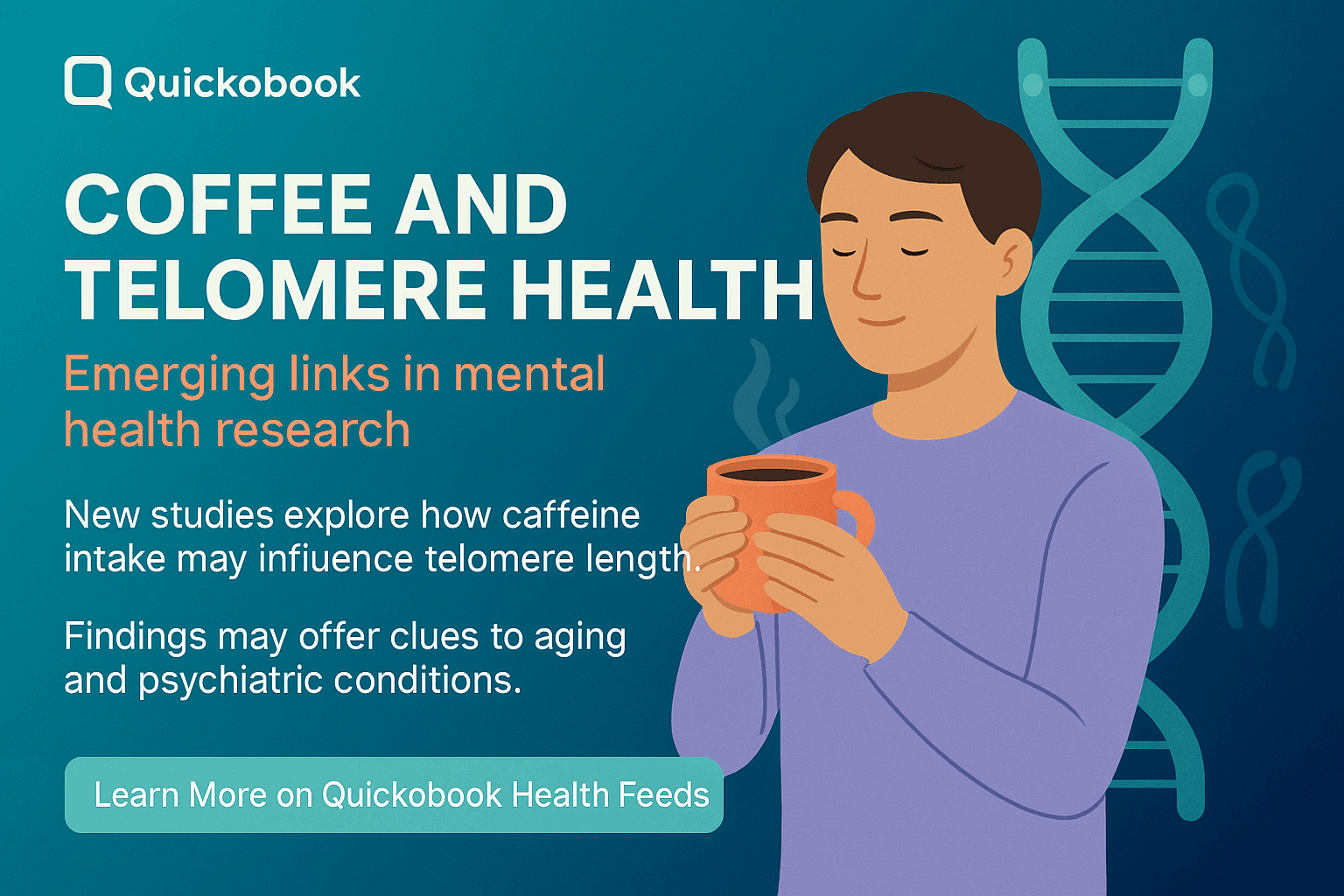
Introduction Coffee is one of the most loved drinks in India and across the world. Many people enjoy it for energy, focus, and comfort. But recent research shows something even more interesting - coffee consumption may be linked to telomere length , a marker of cell aging. Telomeres are tiny protective caps at the ends of our DNA. They get shorter as we age. Shorter telomeres are linked with stress, chronic illness, and age-related decline.
2Causes and risk factors
Studies also suggest that people with psychiatric disorders like depression, anxiety, bipolar disorder, and schizophrenia often have shorter telomeres due to stress, inflammation, and lifestyle factors. This has opened a new scientific question: Can healthy habits like coffee consumption influence telomere length and support better mental health?
3Symptoms to notice
This easy-to-read guide explains the connection, the studies behind it, benefits, risks, lifestyle tips, and when to seek medical advice. The goal is to help patients in India understand the science in a simple way.
Get urgent care if symptoms are severe
Severe pain, breathing difficulty, fainting, bleeding, confusion or rapidly worsening weakness should be treated as urgent.
4Tests and diagnosis
What Are Telomeres and Why Are They Important?
5Care and next steps
Telomeres protect your DNA like plastic caps at the end of a shoelace. They keep your cells stable and healthy.
6Care and next steps
How Telomeres Change Over Time They shorten naturally as you age.
7Care and next steps
They shrink faster due to stress, poor sleep, smoking, alcohol, and inflammation.
8Care and next steps
They are longer when you live a healthy lifestyle with good food, exercise, and stress control.
9Care and next steps
Short telomeres are linked with:
10Care and next steps
faster aging
11Care and next steps
higher chance of chronic illness
12Care and next steps
weaker stress tolerance
13Care and next steps
mental health problems due to long-term stress
14Care and next steps
How Coffee May Affect Telomere Length Coffee contains more than 1,000 natural compounds , including antioxidants, polyphenols, caffeine, and anti-inflammatory chemicals.
15Care and next steps
Possible Positive Effects Antioxidants reduce cell damage.
16Care and next steps
Anti-inflammatory compounds may slow telomere shortening.
17Care and next steps
Improved energy and mood may lower stress, which protects telomeres.
18Care and next steps
Better metabolism supports healthy cells.
19Care and next steps
Possible Negative Effects Coffee is helpful when taken in moderate amounts. Too much may:
20Care and next steps
increase anxiety in sensitive individuals
21Care and next steps
disturb sleep, leading to stress
22Care and next steps
raise acidity or cause stomach upset
23Care and next steps
worsen symptoms in certain psychiatric disorders
24Care and next steps
The impact depends on quantity, timing, and individual health conditions.
25Care and next steps
ALSO READ: Best Diabetologist In Your Silchar: Treatment, Cost & Appointment Tips 2025 Coffee and Psychiatric Disorders: What the Research Suggests Several studies show that people with psychiatric disorders often have shorter telomeres due to chronic stress and inflammation.
26Care and next steps
Effects of Coffee Consumption in These Conditions May reduce inflammation linked to depression.
27Care and next steps
May improve concentration in people with mild cognitive issues.
28Care and next steps
May help stabilize energy levels.
29Care and next steps
Antioxidants in coffee may support healthier telomere maintenance.
30Care and next steps
Important Reminder Coffee cannot replace therapy, medicines, or lifestyle changes for mental health. It is only one factor among many.
31Care and next steps
Symptoms of Psychiatric Disorders That May Influence Telomere Health While symptoms vary, many conditions include stress-related issues that speed up telomere shortening.
32Care and next steps
Common Symptoms Constant sadness or low energy
33Care and next steps
Fear, worry, or panic
34Care and next steps
Mood swings
35Care and next steps
Sleep problems
36Care and next steps
Difficulty focusing
37Care and next steps
Irritability
38Care and next steps
Loss of interest in daily activities
39Care and next steps
When these symptoms continue for months or years, they may increase biological stress on cells.
40Care and next steps
How Doctors Study Telomere Length Doctors do not routinely measure telomeres for mental health treatment, but scientists use special lab tests.
41Care and next steps
Tests Used in Research PCR-based telomere testing
42Care and next steps
DNA analysis from blood samples
43Care and next steps
Oxidative stress markers
44Care and next steps
Cortisol (stress hormone) levels
45Care and next steps
These methods help researchers understand aging patterns in psychiatric disorders.
46Care and next steps
Treatment Approaches for Psychiatric Disorders (Beyond Coffee)
47Care and next steps
Coffee can be complementary, but proper care is essential for managing mental health.
48Care and next steps
Medical Treatments Antidepressants
49Care and next steps
Anti-anxiety medicines
50Care and next steps
Mood stabilizers
51Care and next steps
Antipsychotic medicines
52Care and next steps
( Dosage always depends on a doctor - never self-medicate. )
53Care and next steps
Psychological Treatments Cognitive Behavioural Therapy (CBT)
54Care and next steps
Mindfulness-based therapy
55Care and next steps
Interpersonal therapy
56Care and next steps
Stress-management counselling
57Care and next steps
Lifestyle-Based Interventions Sleep improvement
58Care and next steps
Physical activity
59Care and next steps
Healthy diet
60Care and next steps
Reducing alcohol and smoking
61Care and next steps
Building supportive relationships
62Care and next steps
How to Use Coffee Safely for Better Mental and Cellular Health Ideal Intake For most adults in India:
63Care and next steps
1–2 cups of coffee per day is considered moderate and safe.
64Care and next steps
Best Practices Avoid coffee after 6 PM to protect sleep.
65Care and next steps
Choose filtered coffee to reduce acidity.
66Care and next steps
Do not replace meals with coffee.
67Care and next steps
Avoid very sugary café drinks.
68Care and next steps
People with anxiety disorders should start with small quantities.
69Care and next steps
People Who Should Reduce Coffee Those with severe anxiety
70Care and next steps
People with insomnia
71Care and next steps
Individuals on stimulant medicines
72Care and next steps
Pregnant women (limit to doctor-recommended levels)
73Care and next steps
Lifestyle Habits That Support Telomere Length Coffee alone cannot protect telomeres. A healthy lifestyle is essential.
74Care and next steps
Helpful Daily Habits Walking or light exercise 30 minutes/day
75Care and next steps
Eating fruits, nuts, whole grains, pulses
76Care and next steps
Practising yoga or meditation
77Care and next steps
Sleeping 7–8 hours
78Care and next steps
Avoiding alcohol and tobacco
79Care and next steps
Spending time in natural sunlight
80Care and next steps
These habits lower stress and improve brain and cell health.
81Care and next steps
When to See a Doctor
82Care and next steps
Seek medical help if you notice:
83Care and next steps
long-lasting sadness or worry
84Care and next steps
panic attacks
85Care and next steps
losing interest in work or daily life
86Care and next steps
sleep problems for weeks
87Care and next steps
sudden weight changes
88Care and next steps
thoughts of self-harm
89Care and next steps
inability to perform daily tasks
90Care and next steps
Mental health conditions improve faster with early care.
91Care and next steps
Risks and Complications of Ignoring Psychiatric Symptoms If left untreated, psychiatric disorders may cause:
92Care and next steps
faster telomere shortening
93Care and next steps
greater aging effects
94Care and next steps
weaker immunity
95Care and next steps
chronic stress
96Care and next steps
poor work performance
97Care and next steps
relationship problems
98Care and next steps
increase risk of sexual health problems.
99Care and next steps
Early diagnosis prevents long-term complications.
100Care and next steps
Conclusion Coffee consumption may influence telomere length and overall mental health due to its antioxidants and anti-inflammatory compounds. For people living with psychiatric disorders, moderate coffee intake may support healthier cell aging and mood balance. But coffee alone is not a treatment. It works best when combined with good sleep, healthy habits, therapy, and proper medical care.
101Care and next steps
If you or someone you know struggles with mental health, reach out early. With timely treatment and support, recovery becomes easier.
102Care and next steps
Quickobook CTAs Book a mental health consultation on Quickobook - connect with trusted psychiatrists and psychologists near you.
103Care and next steps
Find general physicians for routine checkups and lifestyle guidance.
104Care and next steps
Use Quickobook for easy appointment booking, low wait times, and verified doctors.
105Care and next steps
Disclaimer This blog is for educational purposes only. It does not diagnose or replace medical treatment. Always consult a qualified doctor before making changes to your medicines, diet, or lifestyle.
106Care and next steps
50 FAQs (Each answer ≤3 sentences for AEO clarity.)
107Care and next steps
Q: What are telomeres?
108Care and next steps
A: Telomeres are protective caps at the ends of DNA that keep cells healthy as they divide.
109Care and next steps
Q: How does coffee affect telomeres?
110Care and next steps
A: Coffee's antioxidants may slow telomere shortening by reducing cell stress.
111Care and next steps
Q: Do people with psychiatric disorders have shorter telomeres?
112Care and next steps
A: Yes, many studies show shorter telomeres due to long-term stress and inflammation.
113Care and next steps
Q: Can coffee improve mental health?
114Care and next steps
A: Moderate coffee may improve mood and focus, but it cannot replace treatment.
115Care and next steps
Q: How much coffee is safe?
116Care and next steps
A: For most adults, 1–2 cups per day is safe.
117Care and next steps
Q: Can too much coffee worsen anxiety?
118Care and next steps
A: Yes, excess caffeine can increase nervousness and restlessness.
119Care and next steps
Q: Does coffee reduce depression symptoms?
120Care and next steps
A: It may help mood slightly, but medicines and therapy are still important.
121Care and next steps
Q: Can coffee support healthy aging?
122Care and next steps
A: Antioxidants in coffee may help reduce cell damage.
123Care and next steps
Q: Is instant coffee healthy?
124Care and next steps
A: Yes, it still contains antioxidants, though slightly less than brewed coffee.
125Care and next steps
Q: Does coffee cure psychiatric disorders?
126Care and next steps
A: No, it only offers supportive benefits.
127Care and next steps
Q: Can teenagers drink coffee safely?
128Care and next steps
A: Small amounts are usually safe, but too much may affect sleep.
129Care and next steps
Q: Does coffee affect sleep?
130Care and next steps
A: Yes, drinking coffee late can make it harder to fall asleep.
131Care and next steps
Q: Is decaf coffee helpful?
132Care and next steps
A: Yes, it has antioxidants without high caffeine.
133Care and next steps
Q: Can coffee reduce stress?
134Care and next steps
A: It may help some people feel more alert and positive.
135Care and next steps
Q: Does coffee increase heart rate?
136Care and next steps
A: Yes, caffeine can temporarily raise heart rate.
137Care and next steps
Q: Can coffee cause addiction?
138Care and next steps
A: Some people may become dependent on caffeine for energy.
139Care and next steps
Q: Is coffee safe for people with bipolar disorder?
140Care and next steps
A: They should consume it carefully, as excessive caffeine may increase agitation.
141Care and next steps
Q: Does coffee worsen panic attacks?
142Care and next steps
A: Yes, high caffeine may trigger them.
143Care and next steps
Q: Can coffee help memory?
144Care and next steps
A: Moderate caffeine may improve attention and memory temporarily.
145Care and next steps
Q: Do telomeres get longer with coffee?
146Care and next steps
A: Coffee may protect them, but it does not regrow them.
147Care and next steps
Q: Can lifestyle changes protect telomeres?
148Care and next steps
A: Yes, healthy food, sleep, and exercise help.
149Care and next steps
Q: Are psychiatric disorders linked to aging?
150Care and next steps
A: Long-term stress in these conditions may speed biological aging.
151Care and next steps
Q: Does sleep affect telomeres?
152Care and next steps
A: Poor sleep may shorten telomeres faster.
153Care and next steps
Q: Is tea better than coffee?
154Care and next steps
A: Tea has antioxidants too, but effects differ from coffee.
155Care and next steps
Q: Can quitting coffee improve anxiety?
156Care and next steps
A: Yes, many people feel calmer after reducing caffeine.
157Care and next steps
Q: Does smoking affect telomeres?
158Care and next steps
A: Yes, it shortens them quickly.
159Care and next steps
Q: Can yoga improve telomere health?
160Care and next steps
A: Yes, it reduces stress and supports cell health.
161Care and next steps
Q: Do antidepressants affect telomeres?
162Care and next steps
A: Some studies suggest improvement with treatment, but more research is needed.
163Care and next steps
Q: Can poor diet damage telomeres?
164Care and next steps
A: Yes, unhealthy food increases inflammation.
165Care and next steps
Q: Is coffee safe during pregnancy?
166Care and next steps
A: Only limited amounts are allowed; ask your doctor.
167Care and next steps
Q: Can coffee cause dehydration?
168Care and next steps
A: Only slightly; drinking water helps.
169Care and next steps
Q: Does stress shorten telomeres?
170Care and next steps
A: Yes, chronic stress is a major cause.
171Care and next steps
Q: Can meditation protect telomeres?
172Care and next steps
A: Yes, it reduces stress hormones.
173Care and next steps
Q: Do children need caffeine?
174Care and next steps
A: No, it is better to avoid it.
175Care and next steps
Q: Can physical fitness lengthen telomeres?
176Care and next steps
A: It can slow shortening and improve overall health.
177Care and next steps
Q: Does coffee help focus?
178Care and next steps
A: Yes, caffeine boosts alertness.
179Care and next steps
Q: Can people with schizophrenia drink coffee?
180Care and next steps
A: Yes, but only in moderation.
181Care and next steps
Q: Can coffee cause headaches?
182Care and next steps
A: Withdrawal or excess can cause headaches.
183Care and next steps
Q: Are organic coffees healthier?
184Care and next steps
A: They have fewer chemicals but similar nutrient levels.
185Care and next steps
Q: Does filtered coffee reduce acidity?
186Care and next steps
A: Yes, filtering may make it gentler on the stomach.
187Care and next steps
Q: Does coffee reduce inflammation?
188Care and next steps
A: It has anti-inflammatory compounds.
189Care and next steps
Q: Can coffee interact with medicines?
190Care and next steps
A: Yes, so always check with your doctor.
191Care and next steps
Q: Does drinking coffee daily harm kidneys?
192Care and next steps
A: Moderate intake usually does not harm healthy kidneys.
193Care and next steps
Q: Can coffee help with fatigue in depression?
194Care and next steps
A: It may help temporarily.
195Care and next steps
Q: Does coffee improve mood?
196Care and next steps
A: Yes, it can boost dopamine slightly.
197Care and next steps
Q: Can coffee protect the brain?
198Care and next steps
A: Antioxidants may support long-term brain health.
199Care and next steps
Q: Is black coffee better than milk coffee?
200Care and next steps
A: Black coffee has fewer calories and more antioxidants.
201Care and next steps
Q: Does sugar in coffee affect mental health?
202Care and next steps
A: Too much sugar can worsen mood swings.
203Care and next steps
Q: Can coffee cause stomach issues?
204Care and next steps
A: Yes, in people with acidity or ulcers.
205Care and next steps
Q: Should I start drinking coffee for mental health benefits?
206Care and next steps
A: Only if you enjoy it; it should not replace treatment.
Quick symptom self-check
Use this as a simple prompt before consulting. It is not a diagnosis.