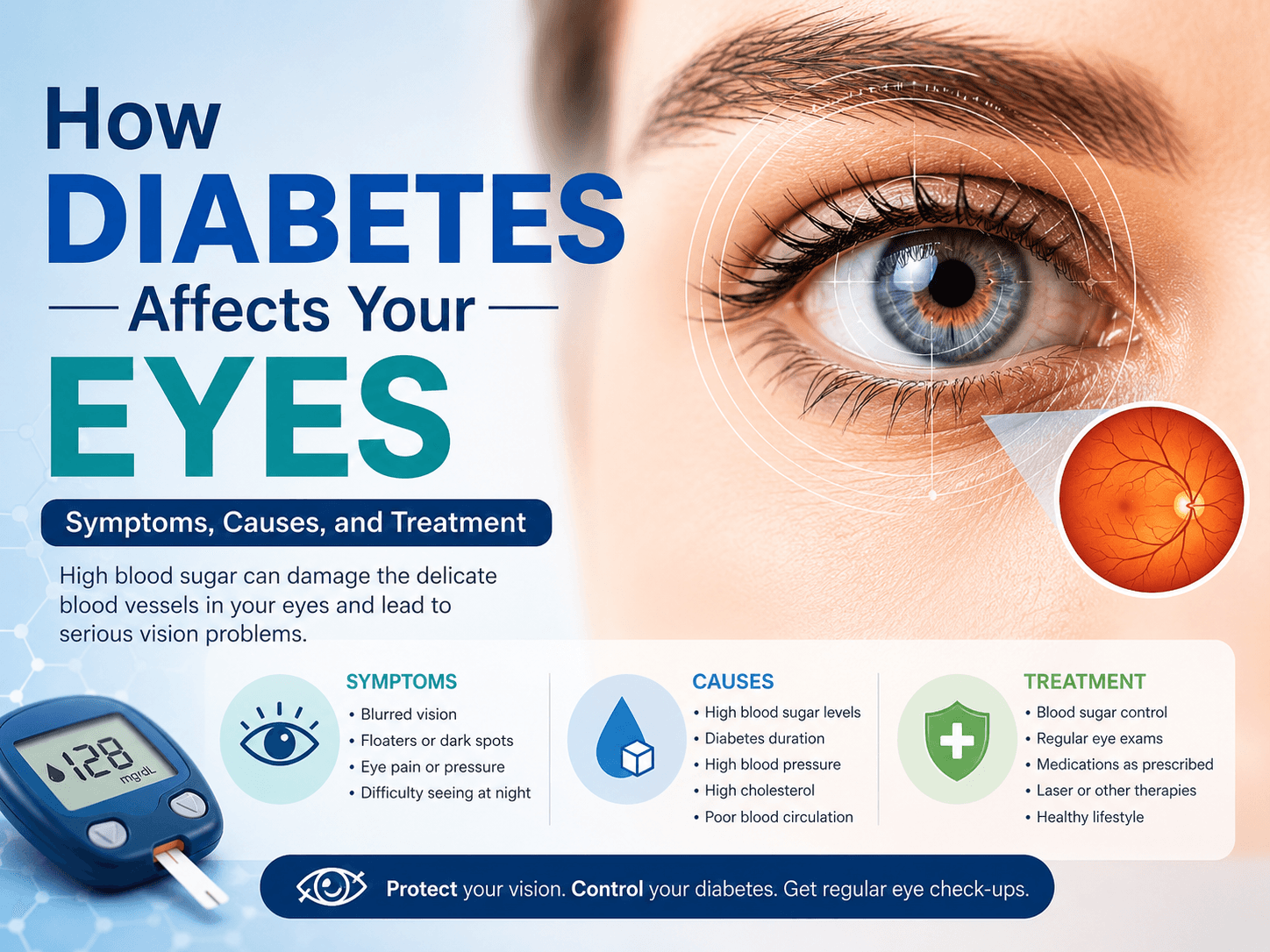
How Diabetes Affects Your Eyes: Symptoms, Causes, And Treatment
Diabetes Eye Problems: How to Protect Your Vision Introduction Living with diabetes means taking care of more than just your blood sugar. One of the most seriou
Quickobook EditorialGeneral health information — not yet medically reviewed
This article is for health awareness only. It does not replace a medical consultation. For emergency symptoms, visit the nearest emergency department.
1What this means
Diabetes Eye Problems: How to Protect Your Vision Introduction Living with diabetes means taking care of more than just your blood sugar. One of the most serious but often ignored complications is diabetes eye problems . High blood sugar can damage the tiny blood vessels in the eyes and slowly affect your vision. Many people do not notice symptoms early, which is why regular eye care is very important.
2Causes and risk factors
According to health experts, diabetes is one of the leading causes of blindness in adults. Conditions like diabetic retinopathy , cataracts, and glaucoma are more common in people with diabetes. The good news is that early diagnosis, proper treatment, and healthy lifestyle habits can help protect your eyesight.
3Symptoms to notice
In this guide, you will learn about diabetes eye problems, causes, symptoms, diagnosis, treatment, prevention, and ways to maintain healthy vision for years to come.
Get urgent care if symptoms are severe
Severe pain, breathing difficulty, fainting, bleeding, confusion or rapidly worsening weakness should be treated as urgent.
4Tests and diagnosis
What Are Diabetes Eye Problems? Diabetes eye problems are vision-related conditions caused by high blood sugar levels damaging the eyes over time. These conditions mainly affect the retina, lens, optic nerve, and blood vessels inside the eye.
5Care and next steps
The most common diabetes-related eye diseases include:
6Care and next steps
Diabetic retinopathy
7Care and next steps
Diabetic macular edema
8Care and next steps
Cataracts
9Care and next steps
Glaucoma
10Care and next steps
Blurred vision due to blood sugar changes
11Care and next steps
Without treatment, these conditions can lead to partial or complete vision loss.
12Care and next steps
How Diabetes Affects the Eyes Your eyes contain small blood vessels that help nourish the retina. The retina is the part of the eye that sends visual signals to the brain. When blood sugar remains high for a long time, these blood vessels become weak and damaged.
13Care and next steps
This can cause:
14Care and next steps
Leakage of fluid or blood
15Care and next steps
Swelling in the retina
16Care and next steps
Poor blood circulation
17Care and next steps
Scar tissue formation
18Care and next steps
Pressure buildup inside the eye
19Care and next steps
Over time, these changes can seriously affect eyesight.
20Care and next steps
Common Types of Diabetes Eye Problems Diabetic Retinopathy Diabetic retinopathy is the most common diabetes-related eye disease. It happens when high blood sugar damages the retina's blood vessels.
21Care and next steps
There are two stages:
22Care and next steps
Non-Proliferative Diabetic Retinopathy (NPDR)
23Care and next steps
Early stage
24Care and next steps
Blood vessels weaken and leak fluid
25Care and next steps
May not cause symptoms initially
26Care and next steps
Proliferative Diabetic Retinopathy (PDR)
27Care and next steps
Advanced stage
28Care and next steps
New abnormal blood vessels grow
29Care and next steps
Can bleed into the eye and cause blindness
30Care and next steps
Diabetic Macular Edema (DME) The macula is the part of the retina responsible for sharp vision. Fluid buildup in this area causes swelling and blurry vision.
31Care and next steps
Symptoms include:
32Care and next steps
Difficulty reading
33Care and next steps
Distorted vision
34Care and next steps
Trouble recognizing faces
35Care and next steps
Cataracts A cataract is clouding of the eye lens. People with diabetes often develop cataracts earlier than others.
36Care and next steps
Symptoms:
37Care and next steps
Blurry vision
38Care and next steps
Sensitivity to light
39Care and next steps
Poor night vision
40Care and next steps
Faded colors
41Care and next steps
Glaucoma Diabetes increases the risk of glaucoma, a condition where eye pressure damages the optic nerve.
42Care and next steps
Symptoms may include:
43Care and next steps
Eye pain
44Care and next steps
Headache
45Care and next steps
Blind spots
46Care and next steps
Vision loss
47Care and next steps
Causes of Diabetes Eye Problems Several factors increase the risk of eye damage in diabetes.
48Care and next steps
High Blood Sugar Uncontrolled glucose levels damage eye blood vessels over time.
49Care and next steps
High Blood Pressure High blood pressure adds pressure to already weak blood vessels.
50Care and next steps
High Cholesterol Fat deposits can block blood flow in the retina.
51Care and next steps
Long Duration of Diabetes The longer you have diabetes, the higher the risk of eye problems.
52Care and next steps
Smoking Smoking worsens blood vessel damage and increases complications.
53Care and next steps
Pregnancy Women with diabetes may experience worsening diabetic retinopathy during pregnancy.
54Care and next steps
Symptoms of Diabetes Eye Problems Early diabetic eye disease may not cause symptoms. As damage progresses, you may notice:
55Care and next steps
Blurred vision
56Care and next steps
Floaters or dark spots
57Care and next steps
Difficulty reading
58Care and next steps
Double vision
59Care and next steps
Eye pain
60Care and next steps
Poor night vision
61Care and next steps
Sudden vision loss
62Care and next steps
Flashes of light
63Care and next steps
Difficulty seeing colors
64Care and next steps
If you notice sudden vision changes, seek medical attention immediately.
65Care and next steps
Who Is at Higher Risk? You are more likely to develop diabetes eye problems if you:
66Care and next steps
Have uncontrolled diabetes
67Care and next steps
Have had diabetes for many years
68Care and next steps
Smoke regularly
69Care and next steps
Have obesity
70Care and next steps
Have high blood pressure
71Care and next steps
Skip eye checkups
72Care and next steps
Are above 40 years old
73Care and next steps
Both type 1 and type 2 diabetes can affect vision.
74Care and next steps
How Doctors Diagnose Diabetes Eye Problems Early detection can prevent severe vision loss.
75Care and next steps
Dilated Eye Exam Special eye drops widen the pupil so the doctor can examine the retina.
76Care and next steps
Optical Coherence Tomography (OCT) This scan checks for retinal swelling and fluid buildup.
77Care and next steps
Fluorescein Angiography A dye is injected into the bloodstream to detect leaking blood vessels.
78Care and next steps
Eye Pressure Test Checks for glaucoma.
79Care and next steps
Visual Acuity Test Measures sharpness and clarity of vision.
80Care and next steps
Doctors usually recommend yearly eye exams for people with diabetes.
81Care and next steps
Treatment for Diabetes Eye Problems Treatment depends on the type and severity of the condition.
82Care and next steps
Blood Sugar Control Keeping blood sugar levels stable is the most important step.
83Care and next steps
Healthy HbA1c targets are usually below 7%, but your doctor may set individual goals.
84Care and next steps
Medications Doctors may use anti-VEGF injections to reduce swelling and stop abnormal blood vessel growth.
85Care and next steps
Common medicines include:
86Care and next steps
Ranibizumab
87Care and next steps
Aflibercept
88Care and next steps
Bevacizumab
89Care and next steps
Dosage and treatment frequency depend on medical advice.
90Care and next steps
Laser Treatment Laser therapy seals leaking blood vessels and prevents further damage.
91Care and next steps
It is commonly used for diabetic retinopathy.
92Care and next steps
Eye Surgery Vitrectomy surgery removes blood or scar tissue from the eye in severe cases.
93Care and next steps
Cataract Surgery Cloudy lenses are replaced with artificial lenses to improve vision.
94Care and next steps
Lifestyle Tips to Protect Your Vision Healthy habits can lower the risk of diabetes eye problems.
95Care and next steps
Control Blood Sugar Check blood sugar regularly and follow your treatment plan.
96Care and next steps
Eat Healthy Foods Choose foods rich in:
97Care and next steps
Green vegetables
98Care and next steps
Fruits
99Care and next steps
Nuts
100Care and next steps
Fish
101Care and next steps
Whole grains
102Care and next steps
Avoid sugary drinks and processed foods.
103Care and next steps
Exercise Regularly Physical activity improves blood circulation and blood sugar control.
104Care and next steps
Aim for at least 30 minutes of exercise most days.
105Care and next steps
Stop Smoking Smoking increases the risk of blindness and poor blood circulation.
106Care and next steps
Manage Blood Pressure Healthy blood pressure protects delicate eye blood vessels.
107Care and next steps
Wear Sunglasses UV rays may worsen eye damage. Use sunglasses outdoors.
108Care and next steps
Take Regular Eye Exams Do not wait for symptoms. Regular screenings can save your vision.
109Care and next steps
Can Diabetes Eye Problems Be Prevented? In many cases, yes. While diabetes may increase the risk, proper management can greatly reduce complications.
110Care and next steps
Prevention tips include:
111Care and next steps
Maintain healthy sugar levels
112Care and next steps
Follow medications properly
113Care and next steps
Get yearly retina exams
114Care and next steps
Eat balanced meals
115Care and next steps
Stay physically active
116Care and next steps
Sleep well
117Care and next steps
Reduce stress
118Care and next steps
Limit alcohol intake
119Care and next steps
Foods That Support Eye Health Some nutrients are especially good for vision.
120Care and next steps
Vitamin A Found in:
121Care and next steps
Carrots
122Care and next steps
Sweet potatoes
123Care and next steps
Spinach
124Care and next steps
Omega-3 Fatty Acids Found in:
125Care and next steps
Fish
126Care and next steps
Flaxseeds
127Care and next steps
Walnuts
128Care and next steps
Vitamin C Found in:
129Care and next steps
Oranges
130Care and next steps
Lemons
131Care and next steps
Guava
132Care and next steps
Zinc Found in:
133Care and next steps
Beans
134Care and next steps
Nuts
135Care and next steps
Dairy products
136Care and next steps
A healthy Indian diet with balanced nutrition can support eye health naturally.
137Care and next steps
Complications of Untreated Diabetes Eye Problems Ignoring eye symptoms can lead to serious complications.
138Care and next steps
Possible risks include:
139Care and next steps
Permanent blindness
140Care and next steps
Retinal detachment
141Care and next steps
Severe glaucoma
142Care and next steps
Eye bleeding
143Care and next steps
Loss of independence
144Care and next steps
Increased risk of accidents
145Care and next steps
Early treatment can prevent many of these complications.
146Care and next steps
When to See a Doctor Visit an eye specialist immediately if you experience:
147Care and next steps
Sudden blurry vision
148Care and next steps
Eye pain
149Care and next steps
Black spots or floaters
150Care and next steps
Loss of side vision
151Care and next steps
Flashes of light
152Care and next steps
Sudden blindness
153Care and next steps
People with diabetes should also have routine eye checkups even without symptoms.
154Care and next steps
Diabetes Eye Care Tips for Daily Life Simple daily habits can protect your eyesight.
155Care and next steps
Follow diabetes medications regularly
156Care and next steps
Avoid skipping meals
157Care and next steps
Drink enough water
158Care and next steps
Rest your eyes during screen time
159Care and next steps
Wear protective glasses if needed
160Care and next steps
Monitor blood sugar at home
161Care and next steps
Keep follow-up appointments
162Care and next steps
Consistency is the key to long-term eye health.
163Care and next steps
Emotional Impact of Vision Problems Vision loss can affect mental health and confidence.
164Care and next steps
Many people experience:
165Care and next steps
Anxiety
166Care and next steps
Stress
167Care and next steps
Fear of blindness
168Care and next steps
Difficulty working
169Care and next steps
Reduced independence
170Care and next steps
Talking to family, doctors, or counselors can help manage emotional challenges.
171Care and next steps
Cost of Diabetes Eye Treatment in India Treatment costs vary depending on the city and hospital.
172Care and next steps
Approximate costs:
173Care and next steps
Eye checkup: ₹500–₹2,000
174Care and next steps
Retina scan: ₹2,000–₹6,000
175Care and next steps
Eye injections: ₹15,000–₹60,000 per dose
176Care and next steps
Laser treatment: ₹10,000–₹50,000
177Care and next steps
Eye surgery: ₹40,000–₹1,50,000
178Care and next steps
Government hospitals may offer lower-cost services.
179Care and next steps
Conclusion Diabetes eye problems can become serious if ignored, but timely care can protect your vision. Conditions like diabetic retinopathy often develop slowly and may not show symptoms early. That is why regular eye checkups, healthy blood sugar levels, and a balanced lifestyle are essential.
180Care and next steps
If you have diabetes, do not wait for blurry vision or eye pain before visiting a doctor. Early diagnosis and treatment can prevent permanent vision loss and help you maintain a healthy and active life.
181Care and next steps
Protecting your eyesight starts with small daily habits and regular medical care.
182Care and next steps
Frequently Asked Questions (50 FAQs) 1. What are diabetes eye problems? Diabetes eye problems are vision conditions caused by high blood sugar damaging the eyes.
183Care and next steps
2. What is diabetic retinopathy? It is a condition where diabetes damages the retina's blood vessels.
184Care and next steps
3. Can diabetes cause blindness? Yes, untreated diabetes eye disease can lead to blindness.
185Care and next steps
4. What are early symptoms of diabetic retinopathy? Blurred vision, floaters, and difficulty seeing clearly are common signs.
186Care and next steps
5. Can type 2 diabetes affect eyesight? Yes, both type 1 and type 2 diabetes can damage vision.
187Care and next steps
6. How often should diabetics get eye exams? At least once every year.
188Care and next steps
7. Is blurry vision always caused by diabetes? No, but diabetes is a common cause of blurred vision.
189Care and next steps
8. Can blood sugar changes affect eyesight temporarily? Yes, high or low sugar levels can temporarily blur vision.
190Care and next steps
9. What is diabetic macular edema? It is swelling in the retina caused by fluid leakage.
191Care and next steps
10. Can diabetic retinopathy be cured? Damage cannot always be reversed, but treatment can slow progression.
192Care and next steps
11. Does controlling sugar help eyesight? Yes, stable sugar levels reduce eye damage risk.
193Care and next steps
12. Can young people get diabetic eye disease? Yes, especially if diabetes is poorly controlled.
194Care and next steps
13. Is eye pain common in diabetic retinopathy? Not always, especially in early stages.
195Care and next steps
14. Can diabetes cause cataracts? Yes, cataracts are more common in diabetics.
196Care and next steps
15. Does diabetes increase glaucoma risk? Yes, diabetics have a higher chance of glaucoma.
197Care and next steps
16. What foods help eye health? Leafy greens, fish, carrots, nuts, and fruits support vision.
198Care and next steps
17. Can exercise improve eye health? Exercise helps control blood sugar and blood circulation.
199Care and next steps
18. Can smoking worsen diabetic eye disease? Yes, smoking damages blood vessels further.
200Care and next steps
19. Are eye injections painful? Doctors use numbing medicine, so discomfort is usually minimal.
201Care and next steps
20. What is laser treatment for diabetic eyes? Laser therapy seals leaking blood vessels.
202Care and next steps
21. Can stress affect diabetes complications? Stress can increase blood sugar levels.
203Care and next steps
22. Is diabetic eye disease permanent? Some damage can be permanent if treatment is delayed.
204Care and next steps
23. What is the retina? The retina is the light-sensitive tissue at the back of the eye.
205Care and next steps
24. Can pregnancy worsen diabetic retinopathy? Yes, pregnancy may increase the risk temporarily.
206Care and next steps
25. What is HbA1c? It is a blood test showing average sugar levels over 3 months.
207Care and next steps
26. Can diabetes affect night vision? Yes, some people struggle to see at night.
208Care and next steps
27. What are floaters in vision? Floaters are dark spots or shapes drifting across vision.
209Care and next steps
28. Can eye damage happen without symptoms? Yes, early diabetic eye disease may be silent.
210Care and next steps
29. How long does diabetic retinopathy take to develop? It may develop slowly over several years.
211Care and next steps
30. Is retina screening painful? No, retina scans are usually painless.
212Care and next steps
31. Can eye surgery restore vision fully? Results vary depending on the severity of damage.
213Care and next steps
32. Can children with diabetes develop eye problems? Yes, especially after many years of diabetes.
214Care and next steps
33. Does high blood pressure affect eyesight? Yes, it increases blood vessel damage risk.
215Care and next steps
34. Can diabetes cause dry eyes? Yes, some diabetics experience dry eyes.
216Care and next steps
35. Are sunglasses helpful for diabetics? Yes, they protect eyes from UV rays.
217Care and next steps
36. Can healthy eating reduce eye risks? Yes, nutrition supports eye and blood vessel health.
218Care and next steps
37. What specialist treats diabetic eye disease? An ophthalmologist or retina specialist treats these problems.
219Care and next steps
38. Can diabetes affect color vision? Yes, severe eye damage may affect color perception.
220Care and next steps
39. Is screen time harmful for diabetic eyes? Long screen use may increase eye strain but not directly cause retinopathy.
221Care and next steps
40. Can sleep affect blood sugar control? Yes, poor sleep may worsen diabetes management.
222Care and next steps
41. Can diabetes cause sudden vision loss? Severe retinal bleeding may cause sudden loss of vision.
223Care and next steps
42. Is vision loss from diabetes reversible? Early treatment may improve some vision problems.
224Care and next steps
43. What are anti-VEGF injections? These medicines reduce abnormal blood vessel growth.
225Care and next steps
44. Can eye pressure increase with diabetes? Yes, leading to glaucoma risk.
226Care and next steps
45. Is alcohol harmful for diabetic eyes? Excess alcohol may worsen diabetes control.
227Care and next steps
46. Can walking help diabetes management? Yes, regular walking improves blood sugar levels.
228Care and next steps
47. Do all diabetics get eye problems? No, good diabetes control lowers the risk.
229Care and next steps
48. Can regular testing prevent blindness? Early detection helps prevent severe vision loss.
230Care and next steps
49. What should I do if vision suddenly changes? Seek immediate medical care.
231Care and next steps
50. Can diabetes eye problems be prevented completely? Risk can be reduced greatly with proper care and regular monitoring.
232Care and next steps
Book an Eye Specialist Through Quickobook Looking for trusted eye specialists for diabetes eye problems? Quickobook helps you connect with experienced doctors, eye clinics, and retina specialists near you. Book appointments easily and take the first step toward protecting your vision today.
233Care and next steps
Quickobook CTA Find experienced eye specialists near you
234Care and next steps
Book diabetes eye screening online
235Care and next steps
Consult verified doctors instantly
236Care and next steps
Get regular health checkups for diabetes care
237Care and next steps
Disclaimer This article is for educational purposes only and does not replace professional medical advice, diagnosis, or treatment. Please consult a qualified healthcare provider for personalized care.
Quick symptom self-check
Use this as a simple prompt before consulting. It is not a diagnosis.