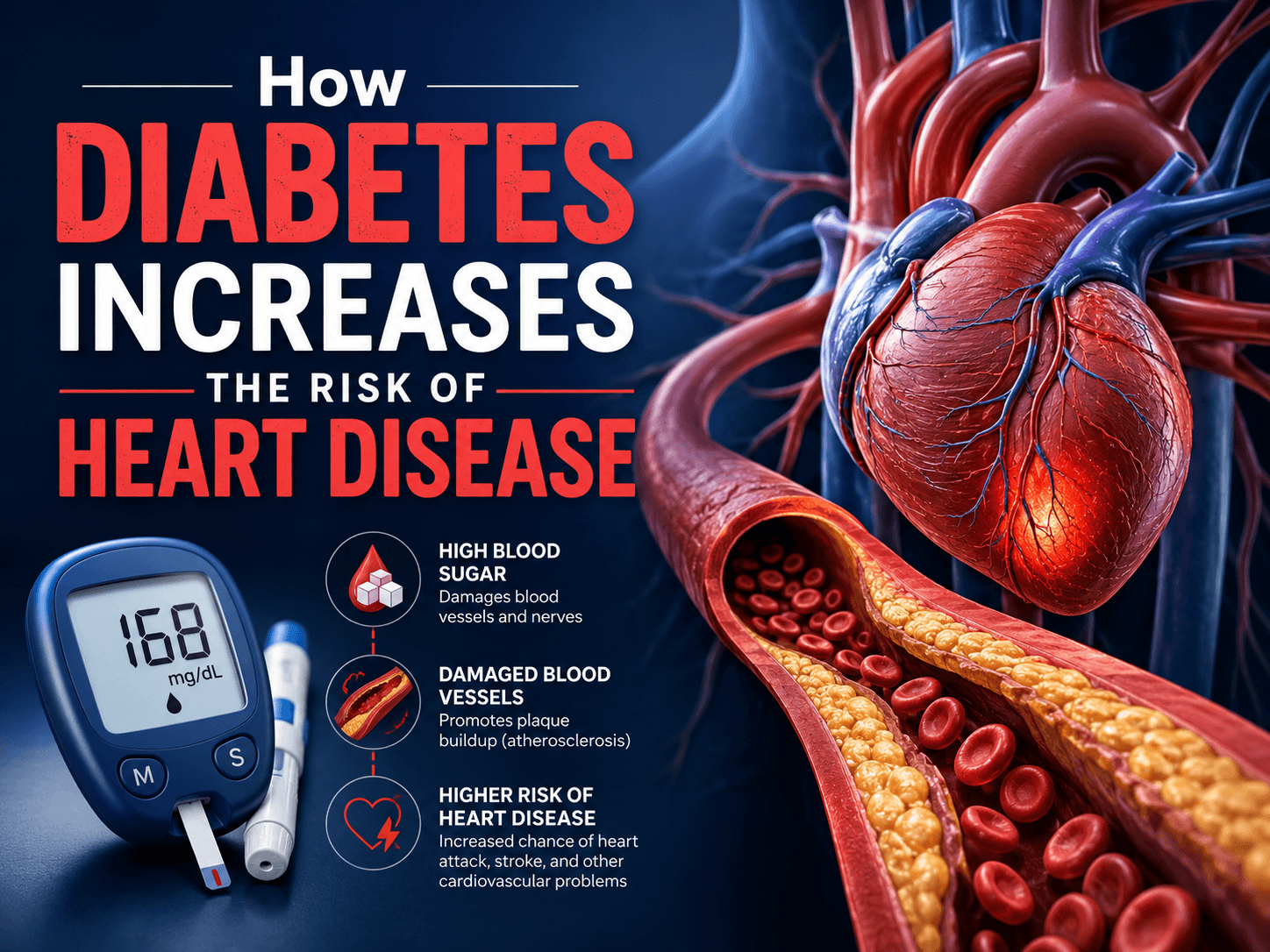
How Diabetes Increases The Risk Of Heart Disease
Introduction Diabetes is one of the most common health conditions in India. It affects millions of people every year. Many people know that diabetes raises bloo
Quickobook EditorialGeneral health information — not yet medically reviewed
This article is for health awareness only. It does not replace a medical consultation. For emergency symptoms, visit the nearest emergency department.
1What this means
Introduction Diabetes is one of the most common health conditions in India. It affects millions of people every year. Many people know that diabetes raises blood sugar levels, but fewer people understand that it can also seriously harm the heart.
2Causes and risk factors
People with diabetes are much more likely to develop heart disease compared to those without diabetes. High blood sugar damages blood vessels and affects the heart over time. This increases the risk of heart attack, stroke, high blood pressure, and other cardiovascular problems.
3Symptoms to notice
Understanding the connection between diabetes and heart disease is important because early care and lifestyle changes can reduce these risks. In this article, you will learn how diabetes affects the heart, warning signs to watch for, treatment options, prevention methods, and when to seek medical help.
Get urgent care if symptoms are severe
Severe pain, breathing difficulty, fainting, bleeding, confusion or rapidly worsening weakness should be treated as urgent.
4Tests and diagnosis
What Is Diabetes? Diabetes is a condition where the body cannot properly control blood sugar levels.
5Care and next steps
There are mainly two types:
6Care and next steps
Type 1 Diabetes: The body does not produce insulin.
7Care and next steps
Type 2 Diabetes: The body cannot use insulin properly.
8Care and next steps
Insulin is a hormone that helps sugar move from the blood into the body's cells for energy.
9Care and next steps
When blood sugar stays high for a long time, it damages blood vessels, nerves, and organs, including the heart.
10Care and next steps
What Is Heart Disease? Heart disease refers to conditions that affect the heart and blood vessels. It includes:
11Care and next steps
Coronary artery disease
12Care and next steps
Heart attack
13Care and next steps
Heart failure
14Care and next steps
Stroke
15Care and next steps
High blood pressure
16Care and next steps
Irregular heartbeat
17Care and next steps
Heart disease is one of the leading causes of death in India.
18Care and next steps
How Diabetes Increases the Risk of Heart Disease People with diabetes are nearly twice as likely to develop heart disease. Several factors contribute to this increased risk.
19Care and next steps
High Blood Sugar Damages Blood Vessels Excess sugar in the blood damages the inner lining of blood vessels. This causes inflammation and makes it easier for fatty deposits to build up.
20Care and next steps
Over time, blood vessels become narrow and hard. This reduces blood flow to the heart.
21Care and next steps
Increased Cholesterol Levels Diabetes often causes unhealthy cholesterol levels, including:
22Care and next steps
High LDL (bad cholesterol)
23Care and next steps
Low HDL (good cholesterol)
24Care and next steps
High triglycerides
25Care and next steps
These changes increase plaque buildup in arteries.
26Care and next steps
High Blood Pressure Many people with diabetes also have high blood pressure. High blood pressure forces the heart to work harder and damages arteries faster.
27Care and next steps
Obesity and Excess Weight Being overweight increases insulin resistance and puts extra pressure on the heart.
28Care and next steps
Abdominal fat is especially harmful because it raises inflammation levels in the body.
29Care and next steps
Chronic Inflammation Diabetes causes long-term inflammation inside blood vessels. Inflammation increases the risk of artery blockage and heart attacks.
30Care and next steps
Nerve Damage Diabetes can damage nerves that control the heart and blood vessels. This condition is called diabetic neuropathy.
31Care and next steps
Some people may not feel warning signs of heart disease due to nerve damage.
32Care and next steps
Symptoms of Heart Disease in People With Diabetes Heart disease symptoms may appear slowly in people with diabetes.
33Care and next steps
Common symptoms include:
34Care and next steps
Chest pain or pressure
35Care and next steps
Shortness of breath
36Care and next steps
Fatigue
37Care and next steps
Swelling in legs or feet
38Care and next steps
Dizziness
39Care and next steps
Fast heartbeat
40Care and next steps
Pain in arms, neck, jaw, or back
41Care and next steps
Nausea
42Care and next steps
Excess sweating
43Care and next steps
Some people with diabetes may have a “silent heart attack” with very mild symptoms.
44Care and next steps
Risk Factors That Make Heart Disease Worse in Diabetes Several factors increase the risk further.
45Care and next steps
Smoking Smoking damages blood vessels and raises blood pressure.
46Care and next steps
Lack of Exercise Physical inactivity weakens the heart and increases weight gain.
47Care and next steps
Unhealthy Diet Eating foods high in sugar, salt, and unhealthy fats worsens diabetes and heart disease risk.
48Care and next steps
Stress Long-term stress can raise blood pressure and blood sugar levels.
49Care and next steps
Family History A family history of diabetes or heart disease increases the chances of developing complications.
50Care and next steps
Complications of Diabetes-Related Heart Disease If left untreated, diabetes can lead to severe heart complications.
51Care and next steps
Heart Attack Blocked arteries reduce blood flow to the heart muscle.
52Care and next steps
Stroke Blocked or burst blood vessels in the brain can cause stroke.
53Care and next steps
Heart Failure The heart becomes too weak to pump blood properly.
54Care and next steps
Kidney Disease Heart disease and kidney disease often occur together in people with diabetes.
55Care and next steps
Peripheral Artery Disease Reduced blood flow to the legs causes pain and slow wound healing.
56Care and next steps
How Doctors Diagnose Heart Disease in Diabetes Patients Doctors use several tests to check heart health.
57Care and next steps
Blood Tests These tests check:
58Care and next steps
Blood sugar
59Care and next steps
Cholesterol
60Care and next steps
Triglycerides
61Care and next steps
Blood Pressure Monitoring Regular monitoring helps detect hypertension early.
62Care and next steps
ECG (Electrocardiogram) An ECG checks heart rhythm and detects abnormalities.
63Care and next steps
Echocardiogram This ultrasound test shows heart structure and pumping ability.
64Care and next steps
Stress Test A stress test checks how the heart performs during exercise.
65Care and next steps
CT Scan or Angiography These imaging tests detect blocked arteries.
66Care and next steps
Treatment for Diabetes and Heart Disease Treatment focuses on controlling blood sugar and protecting the heart.
67Care and next steps
Medications Doctors may prescribe:
68Care and next steps
Insulin
69Care and next steps
Metformin
70Care and next steps
Blood pressure medicines
71Care and next steps
Cholesterol-lowering medicines
72Care and next steps
Blood thinners
73Care and next steps
Dosage depends on the patient's condition and doctor's advice.
74Care and next steps
Lifestyle Changes Healthy habits are essential for long-term improvement.
75Care and next steps
Eat a Heart-Healthy Diet Include:
76Care and next steps
Fruits
77Care and next steps
Vegetables
78Care and next steps
Whole grains
79Care and next steps
Lean protein
80Care and next steps
Nuts and seeds
81Care and next steps
Avoid:
82Care and next steps
Sugary drinks
83Care and next steps
Fried foods
84Care and next steps
Processed snacks
85Care and next steps
Excess salt
86Care and next steps
Exercise Regularly Aim for at least 30 minutes of exercise most days.
87Care and next steps
Good options include:
88Care and next steps
Walking
89Care and next steps
Cycling
90Care and next steps
Swimming
91Care and next steps
Yoga
92Care and next steps
Maintain Healthy Weight Losing even a small amount of weight improves blood sugar and heart health.
93Care and next steps
Quit Smoking Stopping smoking quickly reduces heart risk.
94Care and next steps
Limit Alcohol Too much alcohol affects blood sugar and blood pressure.
95Care and next steps
Foods That Help Protect the Heart in Diabetes Some foods are especially helpful.
96Care and next steps
Oats Rich in fiber and good for cholesterol control.
97Care and next steps
Fatty Fish Fish like salmon contain omega-3 fatty acids that support heart health.
98Care and next steps
Green Leafy Vegetables Spinach and fenugreek leaves contain nutrients that protect blood vessels.
99Care and next steps
Nuts Almonds and walnuts provide healthy fats.
100Care and next steps
Fruits Apples, berries, and oranges contain antioxidants.
101Care and next steps
Prevention Tips Preventing heart disease is possible with proper care.
102Care and next steps
Monitor Blood Sugar Regularly Keeping sugar levels under control reduces damage to blood vessels.
103Care and next steps
Get Regular Health Checkups Routine screenings help detect problems early.
104Care and next steps
Sleep Well Poor sleep increases blood sugar and blood pressure.
105Care and next steps
Manage Stress Meditation and relaxation exercises can improve heart health.
106Care and next steps
Take Medicines on Time Follow your doctor's instructions carefully.
107Care and next steps
When to See a Doctor Seek medical help immediately if you notice:
108Care and next steps
Severe chest pain
109Care and next steps
Sudden breathing difficulty
110Care and next steps
Weakness on one side of the body
111Care and next steps
Sudden dizziness
112Care and next steps
Fainting
113Care and next steps
Swelling in legs
114Care and next steps
Rapid heartbeat
115Care and next steps
Regular checkups are important even if symptoms are mild.
116Care and next steps
Diabetes and Heart Disease in India India is known as the “diabetes capital” of the world. Sedentary lifestyle, unhealthy eating habits, stress, and lack of physical activity contribute to rising cases.
117Care and next steps
Urban populations are at higher risk due to processed food consumption and reduced exercise.
118Care and next steps
Early awareness and preventive care can lower the burden of diabetes-related heart disease in India.
119Care and next steps
Can Heart Disease Be Reversed? In some cases, lifestyle changes and proper treatment can improve heart health significantly.
120Care and next steps
Early diagnosis gives the best chance of preventing severe complications.
121Care and next steps
However, advanced heart disease may require lifelong treatment and monitoring.
122Care and next steps
Mental Health and Chronic Disease Living with diabetes and heart disease can affect emotional health.
123Care and next steps
People may experience:
124Care and next steps
Anxiety
125Care and next steps
Stress
126Care and next steps
Depression
127Care and next steps
Fear of complications
128Care and next steps
Support from family, doctors, and counselors can help patients cope better.
129Care and next steps
Importance of Regular Monitoring Patients with diabetes should regularly monitor:
130Care and next steps
Blood sugar
131Care and next steps
HbA1c levels
132Care and next steps
Blood pressure
133Care and next steps
Cholesterol
134Care and next steps
Kidney function
135Care and next steps
Tracking these numbers helps prevent major complications.
136Care and next steps
Conclusion Diabetes and heart disease are closely connected. High blood sugar damages blood vessels, increases cholesterol, raises blood pressure, and puts extra strain on the heart.
137Care and next steps
The good news is that proper treatment, healthy lifestyle changes, regular exercise, balanced eating, and routine health checkups can greatly reduce the risk of heart disease.
138Care and next steps
If you have diabetes, taking care of your heart should be a top priority. Early action can help you live a healthier and longer life.
139Care and next steps
Frequently Asked Questions (FAQs) 1. Can diabetes cause heart disease? Yes. High blood sugar damages blood vessels and increases heart disease risk.
140Care and next steps
2. Why do diabetics have more heart attacks? Diabetes damages arteries and raises cholesterol and blood pressure.
141Care and next steps
3. Can Type 2 diabetes affect the heart? Yes. Type 2 diabetes significantly increases cardiovascular risk.
142Care and next steps
4. What are early signs of heart disease in diabetes? Chest pain, fatigue, shortness of breath, and swelling are common signs.
143Care and next steps
5. Can diabetes cause silent heart attacks? Yes. Nerve damage may reduce pain signals.
144Care and next steps
6. Does high blood sugar damage arteries? Yes. Long-term high sugar harms blood vessel walls.
145Care and next steps
7. Is heart disease common in diabetes patients? Yes. It is one of the most common complications.
146Care and next steps
8. Can controlling sugar reduce heart risk? Yes. Good sugar control lowers complications.
147Care and next steps
9. Does diabetes increase stroke risk? Yes. Diabetes raises the chance of stroke.
148Care and next steps
10. Is high blood pressure linked to diabetes? Yes. Many diabetics also have hypertension.
149Care and next steps
11. What foods help diabetic heart health? Vegetables, oats, fish, nuts, and fruits are beneficial.
150Care and next steps
12. Can exercise improve heart health in diabetes? Yes. Exercise strengthens the heart and improves sugar control.
151Care and next steps
13. Is obesity dangerous in diabetes? Yes. Excess weight increases heart strain.
152Care and next steps
14. Should diabetics avoid fried foods? Yes. Fried foods increase cholesterol and heart risk.
153Care and next steps
15. Can stress worsen diabetes and heart disease? Yes. Stress raises blood sugar and blood pressure.
154Care and next steps
16. Is walking good for diabetic patients? Yes. Walking improves circulation and fitness.
155Care and next steps
17. How often should diabetics check heart health? Regular annual checkups are recommended.
156Care and next steps
18. Can cholesterol medicines help diabetics? Yes. They reduce artery blockage risk.
157Care and next steps
19. Are smokers with diabetes at higher risk? Yes. Smoking greatly increases heart complications.
158Care and next steps
20. Can diabetes weaken the heart muscle? Yes. Long-term diabetes can cause heart failure.
159Care and next steps
21. Is chest pain always present during heart attacks? No. Some diabetics have mild or no symptoms.
160Care and next steps
22. Can diabetes affect blood circulation? Yes. Poor circulation is common.
161Care and next steps
23. Does sleep affect diabetes? Yes. Poor sleep worsens blood sugar control.
162Care and next steps
24. Can young diabetics get heart disease? Yes. Risk can begin early without proper care.
163Care and next steps
25. Is HbA1c important for heart health? Yes. It reflects long-term sugar control.
164Care and next steps
26. Can heart disease be prevented in diabetes? Yes. Healthy lifestyle changes reduce risk.
165Care and next steps
27. Is insulin harmful to the heart? No. Proper insulin use helps protect health.
166Care and next steps
28. Can kidney disease increase heart risk? Yes. Kidney and heart health are closely linked.
167Care and next steps
29. Should diabetics limit salt intake? Yes. Excess salt raises blood pressure.
168Care and next steps
30. Can yoga help diabetic heart patients? Yes. Yoga reduces stress and improves fitness.
169Care and next steps
31. What is diabetic cardiomyopathy? It is heart muscle damage caused by diabetes.
170Care and next steps
32. Is fatigue a sign of heart disease? Yes. Persistent tiredness may indicate heart problems.
171Care and next steps
33. Can diabetes cause irregular heartbeat? Yes. Heart rhythm issues may occur.
172Care and next steps
34. Is fruit safe for diabetic patients? Yes. Moderate portions of healthy fruits are beneficial.
173Care and next steps
35. Can dehydration affect blood sugar? Yes. It may increase sugar levels.
174Care and next steps
36. Does family history matter? Yes. Genetics can increase risk.
175Care and next steps
37. Can heart disease affect breathing? Yes. Shortness of breath is common.
176Care and next steps
38. Is alcohol harmful in diabetes? Too much alcohol affects sugar and blood pressure.
177Care and next steps
39. Can diabetics eat sweets occasionally? Only in moderation and with medical guidance.
178Care and next steps
40. What tests check heart disease risk? ECG, cholesterol tests, stress tests, and scans help assess risk.
179Care and next steps
41. Can diabetes damage nerves in the heart? Yes. Diabetic neuropathy affects heart function.
180Care and next steps
42. Does diabetes increase inflammation? Yes. Chronic inflammation damages blood vessels.
181Care and next steps
43. Is regular exercise necessary? Yes. Daily activity improves overall health.
182Care and next steps
44. Can weight loss improve diabetes? Yes. Losing weight improves insulin sensitivity.
183Care and next steps
45. Should diabetics monitor blood pressure? Yes. High blood pressure worsens heart risk.
184Care and next steps
46. Can diabetes affect the brain? Yes. It raises stroke risk.
185Care and next steps
47. Are health checkups important even without symptoms? Yes. Early detection saves lives.
186Care and next steps
48. Can healthy eating reverse early damage? Healthy habits can improve heart and blood vessel function.
187Care and next steps
49. Is diabetes lifelong? Most cases require lifelong management.
188Care and next steps
50. Can proper care help diabetics live long lives? Yes. Good management greatly improves quality of life.
189Care and next steps
Book a Doctor Consultation with Quickobook If you have diabetes symptoms or concerns about your heart health, consult an experienced doctor through Quickobook. Early diagnosis and proper treatment can help prevent serious complications.
190Care and next steps
Quickobook helps you:
191Care and next steps
Find trusted doctors nearby
192Care and next steps
Book appointments easily
193Care and next steps
Access online consultations
194Care and next steps
Get timely healthcare support
195Care and next steps
Take the first step toward better heart and diabetes care today.
196Care and next steps
Disclaimer This article is for informational purposes only and does not replace medical advice, diagnosis, or treatment. Always consult a qualified healthcare professional for personalized guidance.
Quick symptom self-check
Use this as a simple prompt before consulting. It is not a diagnosis.