Obesity In Children: Rising Trend And Prevention Tips
Introduction Obesity in children is becoming a major health concern in India. Many parents believe that extra weight is just “baby fat,” but this is
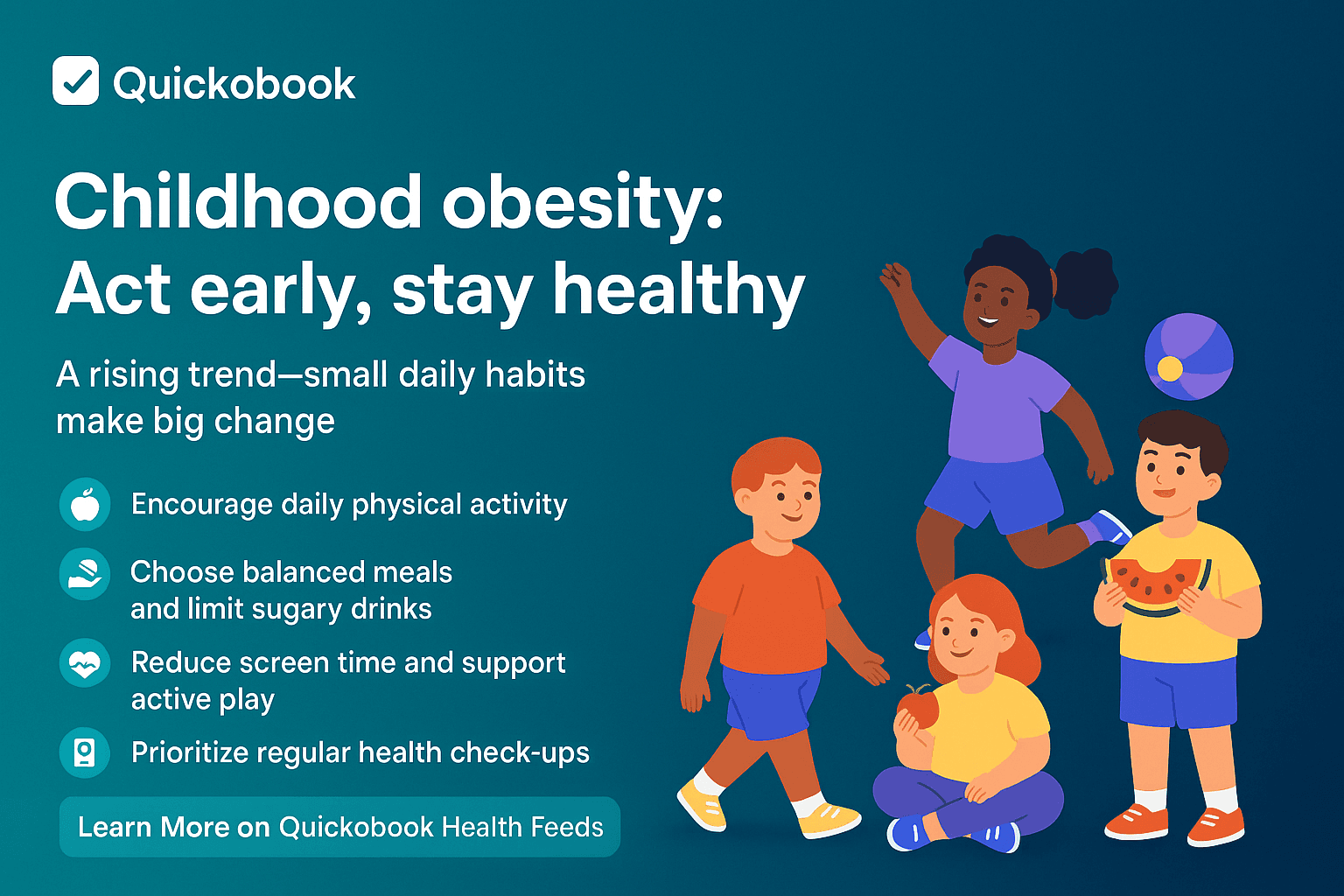
Quickobook EditorialGeneral health information — not yet medically reviewed
This article is for health awareness only. It does not replace a medical consultation. For emergency symptoms, visit the nearest emergency department.
1What this means
Introduction Obesity in children is becoming a major health concern in India. Many parents believe that extra weight is just “baby fat,” but this is not true. Childhood obesity can affect a child's physical and emotional health from an early age. It increases the risk of diabetes, high blood pressure, joint pain, breathing problems, and low confidence. With changing food habits, less outdoor play, long screen time, and busy lifestyles, obesity in children is rising faster than ever. This blog explains the causes, signs, diagnosis, treatment, lifestyle changes, prevention tips, and when to seek medical help to protect child health.
2Causes and risk factors
Understanding Obesity in Children
3Symptoms to notice
Doctor showing BMI-for-age chart to parents while explaining obesity in children
Get urgent care if symptoms are severe
Severe pain, breathing difficulty, fainting, bleeding, confusion or rapidly worsening weakness should be treated as urgent.
4Tests and diagnosis
Childhood obesity means a child has more body fat than what is healthy for their age and height. Doctors use BMI-for-age charts to check whether a child falls in a healthy range. When a child is above the 95th percentile, they are considered obese.
5Care and next steps
Obesity in children is not just a cosmetic issue. It affects growth, learning, and emotional well-being. Early awareness helps parents take steps before serious health problems develop.
6Care and next steps
Causes of Obesity in Children Poor diet Many children eat foods that are high in calories but low in nutrients. Examples include chips, fast food, sweets, chocolates, bakery items, and sugary drinks. Regular intake of these foods leads to weight gain.
7Care and next steps
Lack of physical activity Children today spend more time indoors using mobiles, TV, and video games. Without daily exercise, the body stores extra calories as fat.
8Care and next steps
Genetics If parents or close family members are overweight, children may have a higher chance of weight gain.
9Care and next steps
Emotional reasons Some children overeat when they are sad, stressed, bored, or anxious.
10Care and next steps
Medical conditions (rare) Hormonal issues like thyroid problems can affect weight, but these are uncommon.
11Care and next steps
ALSO READ: Everyday Habits That Slowly Harm Your Heart Symptoms and Warning Signs Parents should watch for:
12Care and next steps
Rapid weight gain
13Care and next steps
Tight clothes even after recent size change
14Care and next steps
Breathlessness after mild activity
15Care and next steps
Loud snoring or disturbed sleep
16Care and next steps
Knee, ankle, or joint pain
17Care and next steps
Feeling tired often
18Care and next steps
Low self-esteem or avoiding social activities
19Care and next steps
Dark, velvety skin patches on the neck (a sign of insulin resistance)
20Care and next steps
Diagnosis of Obesity in Children Doctors may look at:
21Care and next steps
BMI-for-age
22Care and next steps
Waist measurement
23Care and next steps
Growth chart trends
24Care and next steps
Family history
25Care and next steps
Blood tests (blood sugar, thyroid, cholesterol)
26Care and next steps
Physical activity levels
27Care and next steps
Eating habits
28Care and next steps
Early diagnosis helps prevent long-term complications.
29Care and next steps
Treatment Options for Obesity in Children Nutrition counselling A dietitian guides families to choose balanced meals and reduce unhealthy foods. This includes fruits, vegetables, whole grains, and home-cooked meals.
30Care and next steps
Physical activity Children need at least 60 minutes of activity daily. This can include running, cycling, dancing, skipping, yoga, or any outdoor play.
31Care and next steps
Behavioural therapy Helps children develop healthy habits, control cravings, and build confidence.
32Care and next steps
Reducing screen time Limiting mobile and TV use to less than 2 hours per day helps prevent weight gain.
33Care and next steps
Medical treatment Only used in rare cases when lifestyle changes are not enough. Any medicine must be prescribed by a doctor.
34Care and next steps
Lifestyle Tips for Better Child Health
35Care and next steps
Encourage fresh home-cooked meals.
36Care and next steps
Replace soft drinks and packaged juices with water.
37Care and next steps
Set a regular sleep routine (8–10 hours).
38Care and next steps
Avoid rewarding children with sweets or junk food.
39Care and next steps
Keep fruits and healthy snacks easily available.
40Care and next steps
Make weekends active with family walks or sports.
41Care and next steps
Teach children to chew slowly and eat mindfully.
42Care and next steps
Prevention Tips for Obesity in Children Prevention starts early at home. Parents can:
43Care and next steps
Offer balanced meals daily.
44Care and next steps
Promote outdoor play instead of screen time.
45Care and next steps
Limit junk food to occasional treats.
46Care and next steps
Maintain fixed meal timings.
47Care and next steps
Give age-appropriate portion sizes.
48Care and next steps
Encourage drinking more water during the day.
49Care and next steps
Teach children about healthy food choices.
50Care and next steps
Eat together as a family to build good habits.
51Care and next steps
When to See a Doctor Parents should consult a doctor if their child:
52Care and next steps
Gains weight quickly
53Care and next steps
Has sleep problems like snoring
54Care and next steps
Gets tired easily
55Care and next steps
Shows signs of hormonal imbalance
56Care and next steps
Has dark patches on the neck or underarms
57Care and next steps
Suffers from low confidence or bullying
58Care and next steps
Complains of joint pain
59Care and next steps
Early intervention helps prevent future health problems.
60Care and next steps
Risks and Complications of Obesity in Children
61Care and next steps
If not managed in time, obesity can lead to:
62Care and next steps
Type 2 diabetes
63Care and next steps
High blood pressure
64Care and next steps
Asthma and breathing difficulty
65Care and next steps
Early puberty
66Care and next steps
Liver problems (fatty liver)
67Care and next steps
High cholesterol
68Care and next steps
Joint problems
69Care and next steps
Sleep apnea
70Care and next steps
Emotional issues like depression
71Care and next steps
Obesity in adulthood
72Care and next steps
Most of these can be prevented with healthy lifestyle changes.
73Care and next steps
Conclusion Obesity in children is a growing challenge in India, but it can be controlled. Small daily changes in diet, activity, and routine make a big difference. Parents play the most important role in shaping their child's eating and activity habits. If you notice warning signs or rapid weight gain, consult a doctor early. Good health habits learned in childhood can last a lifetime and protect your child from serious diseases.
74Care and next steps
Quickobook Call-to-Action Book a trusted pediatrician or nutrition specialist on Quickobook to assess your child's weight, growth, and health needs.
75Care and next steps
Quick, easy, and reliable appointments available in your city.
76Care and next steps
50 Frequently Asked Questions (FAQs) 1. What is obesity in children?
77Care and next steps
It means a child has too much body fat for their age and height. It is checked using BMI-for-age.
78Care and next steps
2. What is the main cause of obesity in children?
79Care and next steps
The main causes are unhealthy eating, lack of exercise, and long screen time.
80Care and next steps
3. Can obesity in children be reversed?
81Care and next steps
Yes, with early lifestyle changes like healthy eating and more activity.
82Care and next steps
4. Are overweight and obese the same?
83Care and next steps
No. Overweight is mild excess weight; obesity is higher and more serious.
84Care and next steps
5. Does junk food cause obesity?
85Care and next steps
Eating junk food regularly leads to weight gain.
86Care and next steps
6. Can a child be obese even if they eat normal food?
87Care and next steps
Yes, if they are less active or have genetic factors.
88Care and next steps
7. How do doctors diagnose obesity in children?
89Care and next steps
By using BMI-for-age charts and checking growth and blood tests.
90Care and next steps
8. Can obesity run in families?
91Care and next steps
Yes, genetics can increase the risk.
92Care and next steps
9. Is childhood obesity common in India?
93Care and next steps
Yes, rates are rising quickly in both cities and towns.
94Care and next steps
10. Does screen time affect weight?
95Care and next steps
Yes, long screen time reduces activity and increases overeating.
96Care and next steps
11. How much exercise do children need?
97Care and next steps
At least 60 minutes of activity daily.
98Care and next steps
12. Are sugary drinks harmful?
99Care and next steps
Yes, they add extra calories and increase obesity risk.
100Care and next steps
13. Can obesity cause breathing problems?
101Care and next steps
Yes, overweight children often feel breathless.
102Care and next steps
14. Can obesity affect school performance?
103Care and next steps
Poor sleep and low confidence can affect learning.
104Care and next steps
15. Can lack of sleep cause obesity?
105Care and next steps
Yes, it affects appetite and metabolism.
106Care and next steps
16. What are early signs of obesity?
107Care and next steps
Rapid weight gain, tight clothes, and tiredness.
108Care and next steps
17. Can obesity cause diabetes in children?
109Care and next steps
Yes, obesity increases the risk of type 2 diabetes.
110Care and next steps
18. Can a healthy child become obese later?
111Care and next steps
Yes, if they develop unhealthy eating habits.
112Care and next steps
19. Do fruits cause weight gain?
113Care and next steps
No, fruits are healthy when eaten in proper portions.
114Care and next steps
20. Should parents stop giving sweets completely?
115Care and next steps
No, offer them occasionally in small amounts.
116Care and next steps
21. Does skipping meals cause weight gain?
117Care and next steps
Yes, it can lead to overeating later.
118Care and next steps
22. Can emotional stress cause obesity?
119Care and next steps
Yes, stress may lead children to overeat.
120Care and next steps
23. What is BMI-for-age?
121Care and next steps
A chart used to compare a child's weight and height with healthy ranges.
122Care and next steps
24. Is childhood obesity dangerous?
123Care and next steps
Yes, it can cause long-term health problems.
124Care and next steps
25. Should children follow strict diets?
125Care and next steps
No, strict diets are unsafe. Focus on balanced eating.
126Care and next steps
26. Is obesity linked to thyroid problems?
127Care and next steps
Sometimes, but thyroid issues are rare.
128Care and next steps
27. Can children lose weight safely?
129Care and next steps
Yes, with doctor guidance and healthy lifestyle changes.
130Care and next steps
28. Do genetics alone cause obesity?
131Care and next steps
No, lifestyle plays the biggest role.
132Care and next steps
29. Can outdoor play reduce obesity?
133Care and next steps
Yes, active play helps burn calories.
134Care and next steps
30. How can parents help prevent obesity?
135Care and next steps
By offering healthy meals and encouraging activity.
136Care and next steps
31. Can obesity affect mental health?
137Care and next steps
Yes, it may lead to low self-esteem and sadness.
138Care and next steps
32. What foods should be limited?
139Care and next steps
Chips, fast food, sweets, sugary drinks, and packaged snacks.
140Care and next steps
33. Can water help in weight control?
141Care and next steps
Yes, water reduces hunger and supports digestion.
142Care and next steps
34. Can obesity cause joint pain?
143Care and next steps
Yes, extra weight puts pressure on joints.
144Care and next steps
35. Can early treatment prevent complications?
145Care and next steps
Yes, early care avoids serious health issues later.
146Care and next steps
36. Are home-cooked foods better?
147Care and next steps
Yes, they are healthier and more nutritious.
148Care and next steps
37. Can an obese child become fit again?
149Care and next steps
Yes, with steady changes in habits.
150Care and next steps
38. Is walking good exercise for children?
151Care and next steps
Yes, walking daily helps maintain weight.
152Care and next steps
39. How does sleep affect weight?
153Care and next steps
Proper sleep keeps appetite hormones balanced.
154Care and next steps
40. Can family habits impact a child's weight?
155Care and next steps
Yes, children copy what parents eat and do.
156Care and next steps
41. Should children drink energy drinks?
157Care and next steps
No, they contain high sugar and caffeine.
158Care and next steps
42. Can early puberty be linked to obesity?
159Care and next steps
Yes, obesity may trigger early hormonal changes.
160Care and next steps
43. Are nuts good for children?
161Care and next steps
Yes, in small amounts they provide healthy fats.
162Care and next steps
44. Can obesity cause liver problems?
163Care and next steps
Yes, fatty liver disease is common in obese children.
164Care and next steps
45. Can school lunch choices matter?
165Care and next steps
Yes, unhealthy lunch options contribute to weight gain.
166Care and next steps
46. Are sports enough to prevent obesity?
167Care and next steps
Sports help, but diet must also be healthy.
168Care and next steps
47. Do genetics protect some children from obesity?
169Care and next steps
Some children gain weight slowly, but unhealthy habits still harm health.
170Care and next steps
48. Can obesity affect a child's breathing at night?
171Care and next steps
Yes, it may cause sleep apnea.
172Care and next steps
49. Should parents consult a doctor for weight gain?
173Care and next steps
Yes, especially if weight gain is fast or unusual.
174Care and next steps
50. Can obesity in children be prevented?
175Care and next steps
Yes, with healthy food, daily activity, and reduced screen time.
Quick symptom self-check
Use this as a simple prompt before consulting. It is not a diagnosis.