Social Media Addiction: Impact On Teen Mental Health
Introduction Social media addiction is becoming one of the fastest-growing concerns among Indian teenagers. With constant access to smartphones and the pressure
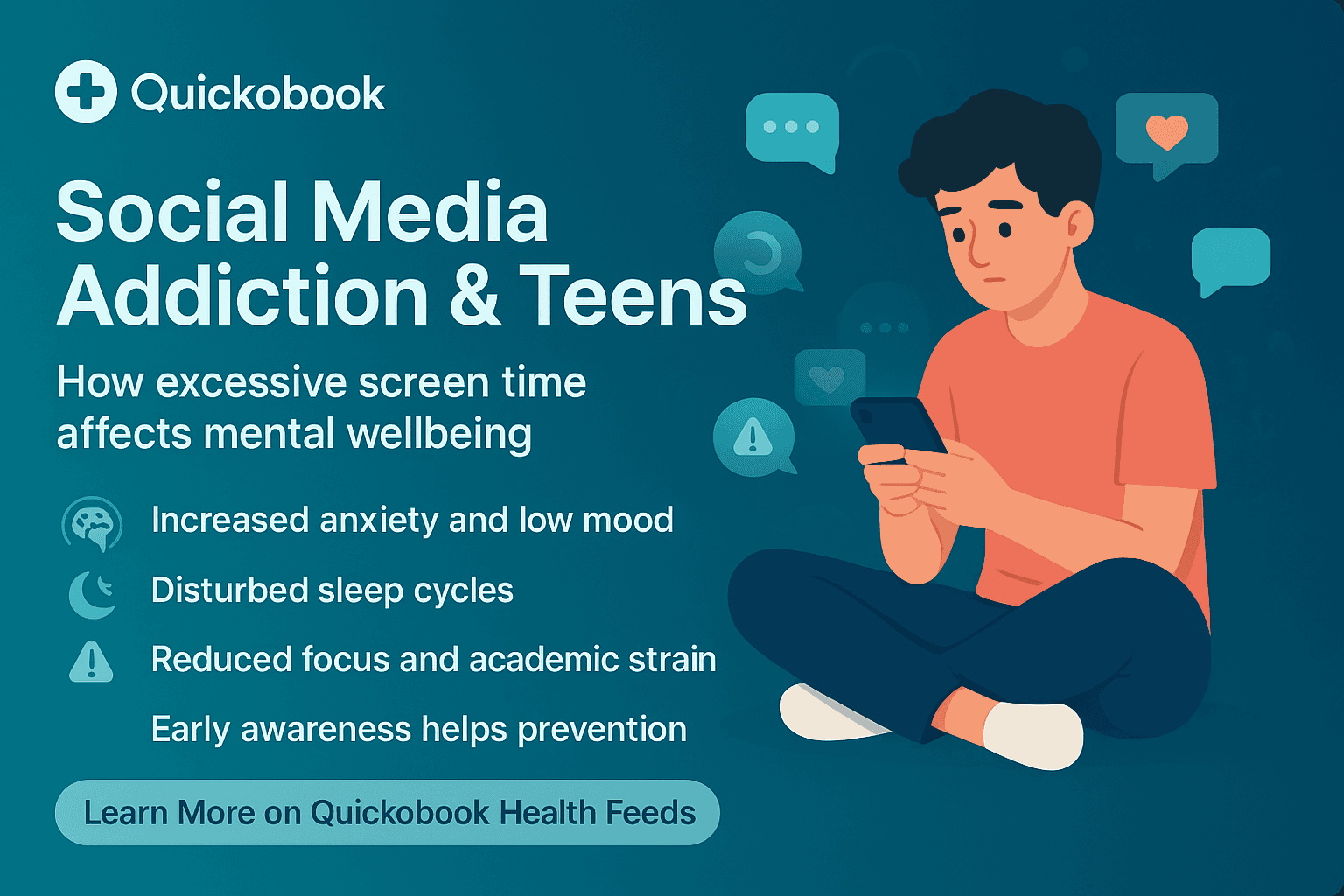
Quickobook EditorialGeneral health information — not yet medically reviewed
This article is for health awareness only. It does not replace a medical consultation. For emergency symptoms, visit the nearest emergency department.
1What this means
Introduction Social media addiction is becoming one of the fastest-growing concerns among Indian teenagers. With constant access to smartphones and the pressure to stay online, teens are spending long hours scrolling, comparing, and interacting on social media. This behaviour affects their mental health , daily routine, studies, confidence, and sleep.
2Causes and risk factors
This guide explains how social media addiction develops, its warning signs, effects on teen mental health, and safe steps parents can take to protect their child's emotional well-being.
3Symptoms to notice
Overview of Social Media Addiction
Get urgent care if symptoms are severe
Severe pain, breathing difficulty, fainting, bleeding, confusion or rapidly worsening weakness should be treated as urgent.
4Tests and diagnosis
Social media addiction means a teen finds it difficult to control how much they use apps like Instagram, Snapchat, YouTube, and X. Even when they want to stop, they feel restless or anxious.
5Care and next steps
This happens because social media triggers the brain's reward chemical, dopamine , making the teen want to scroll again and again.
6Care and next steps
Common signs include: Checking the phone every few minutes
7Care and next steps
Feeling upset when not online
8Care and next steps
Ignoring studies or hobbies
9Care and next steps
Staying awake late at night
10Care and next steps
Feeling sad about likes or comments
11Care and next steps
Causes of Social Media Addiction in Teens Easy access to smartphones Most teens today have personal devices with unlimited internet.
12Care and next steps
Dopamine reward cycle Likes, comments, and notifications create a pleasure loop.
13Care and next steps
Peer pressure and comparison Teens compare looks, achievements, and lifestyles online.
14Care and next steps
Stress, boredom, or emotional escape Teens use social media to avoid real-life problems.
15Care and next steps
Lack of outdoor activity More indoor time increases screen dependence.
16Care and next steps
Symptoms of Social Media Addiction Emotional symptoms Irritability when phone is taken away
17Care and next steps
Anxiety when not checking notifications
18Care and next steps
Mood swings
19Care and next steps
Feeling lonely despite being online
20Care and next steps
Physical symptoms Eye strain
21Care and next steps
Headaches
22Care and next steps
Back/neck pain
23Care and next steps
Poor sleep
24Care and next steps
Behavioural symptoms Lying about screen time
25Care and next steps
Losing interest in hobbies
26Care and next steps
Avoiding family or social events
27Care and next steps
Decreased academic performance
28Care and next steps
Impact on Teen Mental Health
29Care and next steps
Increased anxiety Fear of missing out, comparison, and online pressure cause constant worry.
30Care and next steps
Depression Negative comments, cyberbullying, and low self-esteem can lead to sadness and hopelessness.
31Care and next steps
Sleep disturbances Late-night screen time affects the brain's sleep cycle.
32Care and next steps
Low self-confidence Edited photos and unrealistic standards harm body image.
33Care and next steps
Social withdrawal Teens may reduce real-life interactions and prefer isolation.
34Care and next steps
Diagnosis of Social Media Addiction A mental health professional evaluates:
35Care and next steps
Screen time pattern
36Care and next steps
Behavioural changes
37Care and next steps
Emotional symptoms
38Care and next steps
Social and academic performance
39Care and next steps
Tools like questionnaires and interviews help identify severity. Professional diagnosis is important for timely treatment.
40Care and next steps
ALSO READ: Coffee Consumption Linked To Telomere Length In Psychiatric Disorders Treatment Options Counselling and psychotherapy Therapies like CBT help teens manage emotions, control urges, and build healthy habits.
41Care and next steps
Digital detox plan Reducing screen time gradually, scheduling offline activities, and using app timers.
42Care and next steps
Family therapy Helps parents understand the teen's needs and set supportive boundaries.
43Care and next steps
Lifestyle changes More outdoor games
44Care and next steps
Limited nighttime screen use
45Care and next steps
Hobbies like music, art, reading
46Care and next steps
Medication Used only if a doctor finds associated anxiety, depression, or sleep disorders. Dosage is always based on medical advice.
47Care and next steps
Healthy Lifestyle Tips for Teens Build a routine Set fixed times for study, sleep, and leisure.
48Care and next steps
Follow screen-free zones No phones during meals or before bedtime.
49Care and next steps
Choose real-life activities Sports, hobbies, and group activities reduce dependence.
50Care and next steps
Practice mindfulness Deep breathing and meditation help control stress.
51Care and next steps
Prevention Strategies for Parents and Teens Set healthy screen limits Use digital well-being tools for tracking.
52Care and next steps
Encourage open conversations Talk about online experiences without judgment.
53Care and next steps
Educate on online risks Teach about cyberbullying, fake profiles, and privacy.
54Care and next steps
Promote balanced life Academics, hobbies, social interactions, rest, and outdoor activities must stay balanced.
55Care and next steps
When to See a Doctor
56Care and next steps
Consult a mental health specialist if a teen:
57Care and next steps
Shows extreme irritability without phone
58Care and next steps
Has sudden drop in grades
59Care and next steps
Avoids friends and family
60Care and next steps
Experiences anxiety or sadness for weeks
61Care and next steps
Shows signs of cyberbullying
62Care and next steps
Early help prevents long-term emotional and behavioural issues.
63Care and next steps
Possible Risks and Complications Depression and anxiety disorders Long-term screen addiction can worsen mood-related problems.
64Care and next steps
Social isolation Teens may struggle to form real relationships.
65Care and next steps
Sleep disorders Chronic late-night usage affects brain function and memory.
66Care and next steps
Poor academic performance Lack of focus and tiredness reduce learning ability.
67Care and next steps
Conclusion Social media addiction is a growing challenge for Indian teens, but early awareness and timely support can make a big difference. Parents, teachers, and caregivers must observe changes in behaviour and provide a healthy digital environment at home. With balanced screen use, emotional support, and professional guidance when needed, teens can enjoy technology safely without harming their mental health.
68Care and next steps
Quickobook Call to Action For concerns about your child's emotional health, speak to a mental health expert today.
69Care and next steps
Book appointments with trusted psychologists, psychiatrists , and counsellors on Quickobook for timely guidance and support.
70Care and next steps
Disclaimer This blog is for educational purposes only. It does not replace professional medical advice, diagnosis, or treatment. Always consult a qualified doctor or mental health expert for personalised care.
71Care and next steps
50 FAQs Each answer is simple, clear, and actionable (2–3 sentences).
72Care and next steps
What is social media addiction in teens?
73Care and next steps
A condition where teens cannot control their urge to use social platforms, even when it affects daily life.
74Care and next steps
How much screen time is considered too much?
75Care and next steps
More than 3–4 hours daily for non-school activities may affect teen mental health.
76Care and next steps
Can social media addiction cause anxiety?
77Care and next steps
Yes, constant comparison and FOMO can increase worry and emotional stress.
78Care and next steps
Does social media affect a teen's confidence?
79Care and next steps
Yes, edited photos and online standards can lower self-esteem.
80Care and next steps
What are the early signs of addiction?
81Care and next steps
Restlessness without phone, checking notifications often, and ignoring studies.
82Care and next steps
Can late-night scrolling harm sleep?
83Care and next steps
Yes, blue light disturbs the sleep cycle and reduces deep sleep.
84Care and next steps
Can social media addiction lead to depression?
85Care and next steps
Over time, negative content and cyberbullying can affect mood and cause depression.
86Care and next steps
How does comparison affect teens?
87Care and next steps
Teens may feel inadequate when comparing themselves to influencers or peers.
88Care and next steps
How can parents reduce screen time?
89Care and next steps
Set clear rules, create tech-free zones, and encourage offline hobbies.
90Care and next steps
Is cyberbullying linked to addiction?
91Care and next steps
Yes, frequent online use increases chances of exposure to bullying.
92Care and next steps
Can addiction affect studies?
93Care and next steps
Yes, it reduces focus, memory, and academic performance.
94Care and next steps
Are boys or girls more affected?
95Care and next steps
Both genders are equally affected, but patterns may differ.
96Care and next steps
Can a teen recover without therapy?
97Care and next steps
Mild addiction can improve with routine changes, but severe cases need counselling.
98Care and next steps
What is FOMO?
99Care and next steps
Fear of Missing Out, a strong urge to stay updated with online activities.
100Care and next steps
Is dopamine responsible for addiction?
101Care and next steps
Yes, dopamine creates a reward loop that encourages repeated use.
102Care and next steps
Do social media breaks help?
103Care and next steps
Yes, even short breaks reduce stress and improve attention.
104Care and next steps
Can social media cause body image issues?
105Care and next steps
Yes, unrealistic images can affect how teens view themselves.
106Care and next steps
Is smartphone addiction different from social media addiction?
107Care and next steps
Smartphone addiction includes games and apps, while social media addiction focuses on online interactions.
108Care and next steps
Can teachers help identify addiction?
109Care and next steps
Yes, teachers may notice poor focus or falling grades.
110Care and next steps
How can teens detox from social media?
111Care and next steps
Set app limits, avoid nighttime use, and replace scrolling with hobbies.
112Care and next steps
Does social media affect friendships?
113Care and next steps
Yes, online conflicts and comparison can strain relationships.
114Care and next steps
Can addiction cause anger issues?
115Care and next steps
Teens may become irritable when denied phone access.
116Care and next steps
How common is social media addiction in India?
117Care and next steps
It is increasing rapidly among school and college students.
118Care and next steps
Can oversharing online be harmful?
119Care and next steps
Yes, it exposes teens to privacy risks and cyberbullying.
120Care and next steps
Do games increase social media addiction?
121Care and next steps
Some games link to social platforms, increasing usage.
122Care and next steps
How does excessive scrolling affect memory?
123Care and next steps
It reduces concentration and weakens long-term memory.
124Care and next steps
Can social media make teens feel lonely?
125Care and next steps
Yes, online interactions cannot replace real emotional connection.
126Care and next steps
Is online validation harmful?
127Care and next steps
Depending on likes and comments for self-worth can lower confidence.
128Care and next steps
Does fast internet increase addiction?
129Care and next steps
Fast access encourages nonstop scrolling and longer screen time.
130Care and next steps
Can addiction cause physical pain?
131Care and next steps
Neck pain, eye strain, and headaches are common effects.
132Care and next steps
Can parents monitor usage?
133Care and next steps
Yes, digital well-being tools track screen time.
134Care and next steps
Is deleting apps helpful?
135Care and next steps
It reduces temptation and helps break the habit.
136Care and next steps
Why do teens hide screen time?
137Care and next steps
They may fear restrictions or feel embarrassed.
138Care and next steps
Can fights at home increase addiction?
139Care and next steps
Emotional stress may push teens toward online escape.
140Care and next steps
Do privacy settings matter?
141Care and next steps
Yes, they protect teens from harmful interactions.
142Care and next steps
Can social media influence teen behaviour?
143Care and next steps
Yes, trends and content can shape habits and beliefs.
144Care and next steps
What is digital burnout?
145Care and next steps
Feeling tired or overwhelmed due to excessive online use.
146Care and next steps
Can social media affect teen eating habits?
147Care and next steps
Exposure to body trends may impact diet choices.
148Care and next steps
What is doomscrolling?
149Care and next steps
Constantly scrolling negative news, which increases stress.
150Care and next steps
Can addiction cause isolation?
151Care and next steps
Yes, teens may avoid offline social contact.
152Care and next steps
Should parents set phone curfews?
153Care and next steps
Yes, it improves sleep and reduces nighttime scrolling.
154Care and next steps
Can group activities reduce addiction?
155Care and next steps
Yes, sports and clubs encourage offline bonding.
156Care and next steps
Can social media harm self-image?
157Care and next steps
Yes, teens may compare themselves and feel inferior.
158Care and next steps
Do filters affect mental health?
159Care and next steps
Yes, they create unrealistic beauty expectations.
160Care and next steps
Can therapy help severe addiction?
161Care and next steps
Yes, counselling teaches coping skills and healthy habits.
162Care and next steps
How long does recovery take?
163Care and next steps
It varies, but early intervention speeds improvement.
164Care and next steps
Is social media always harmful?
165Care and next steps
No, safe and limited use can be beneficial.
166Care and next steps
Should teens avoid phones before exams?
167Care and next steps
Yes, reducing screen time improves focus.
168Care and next steps
Can parents also be role models?
169Care and next steps
Yes, balanced phone use by parents influences teens.
170Care and next steps
When should we seek professional help?
171Care and next steps
If addiction affects mood, behaviour, studies, or sleep, a mental health expert should be consulted.
Quick symptom self-check
Use this as a simple prompt before consulting. It is not a diagnosis.