Type 1 Diabetes Vs Type 2 Diabetes: Symptoms, Causes & Risk Factors
Introduction Diabetes is one of the most common health conditions in India today. It affects how your body uses glucose, also called blood sugar. Glucose gives
Quickobook EditorialGeneral health information — not yet medically reviewed
This article is for health awareness only. It does not replace a medical consultation. For emergency symptoms, visit the nearest emergency department.
1What this means
Introduction Diabetes is one of the most common health conditions in India today. It affects how your body uses glucose, also called blood sugar. Glucose gives energy to your body, but when blood sugar levels become too high, it can damage organs, nerves, eyes, kidneys, and the heart.
2Causes and risk factors
The two main types are Type 1 Diabetes and Type 2 Diabetes . Both conditions increase blood sugar levels, but they happen for different reasons. Knowing the difference can help with early diagnosis, proper treatment, and better long-term health.
3Symptoms to notice
In this guide, you will learn about the symptoms, causes, risk factors, diagnosis, treatment options, prevention methods, and lifestyle changes for both Type 1 Diabetes and Type 2 Diabetes.
Get urgent care if symptoms are severe
Severe pain, breathing difficulty, fainting, bleeding, confusion or rapidly worsening weakness should be treated as urgent.
4Tests and diagnosis
What Is Diabetes? Diabetes is a chronic disease that happens when the body cannot properly use or produce insulin.
5Care and next steps
Insulin is a hormone made by the pancreas. It helps sugar move from the blood into the cells for energy.
6Care and next steps
When insulin does not work properly or is not produced in enough amounts, sugar stays in the bloodstream. This causes high blood sugar levels.
7Care and next steps
The two most common forms are:
8Care and next steps
Type 1 Diabetes
9Care and next steps
Type 2 Diabetes
10Care and next steps
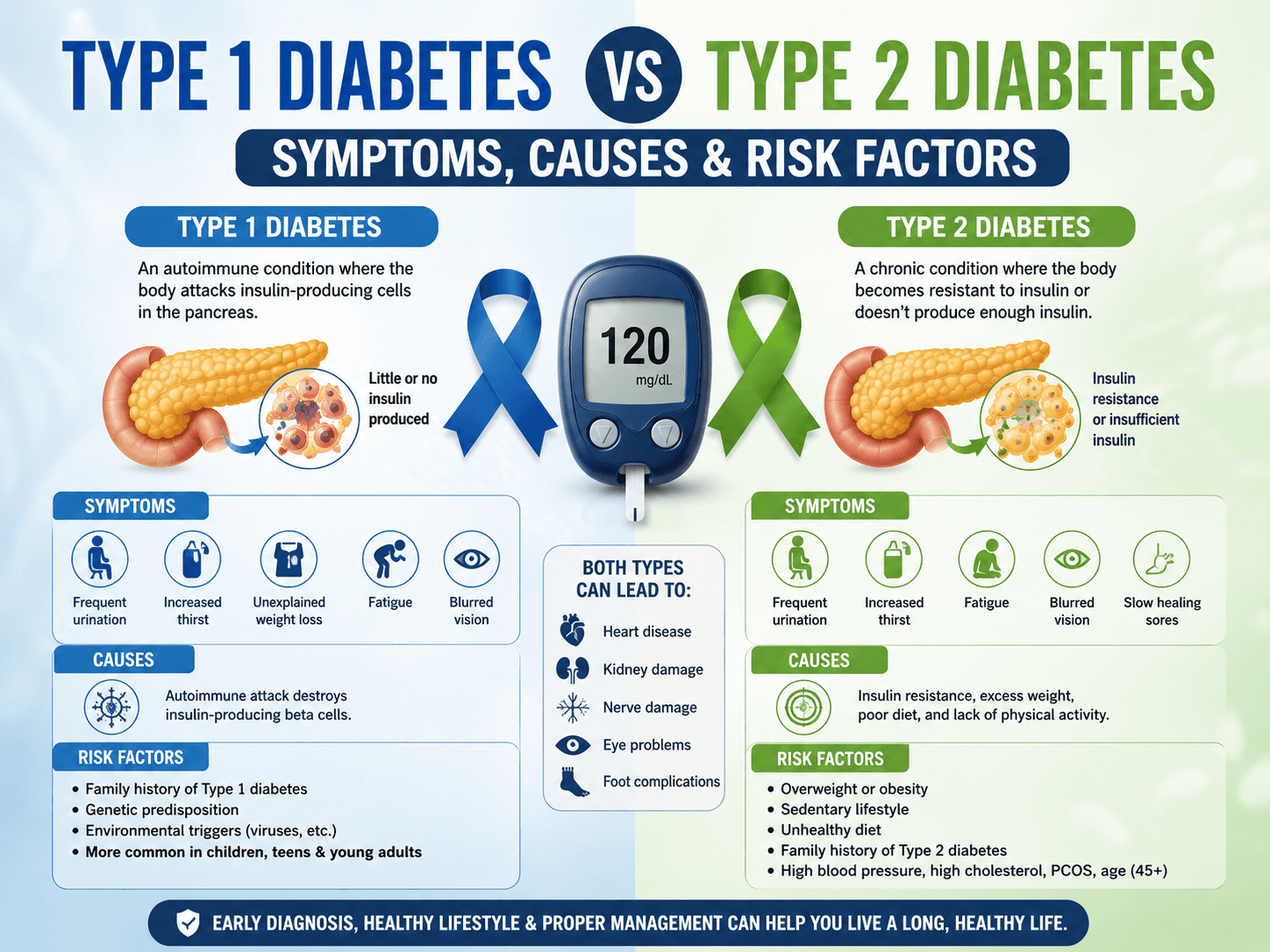
What Is Type 1 Diabetes? Type 1 Diabetes is an autoimmune condition. The body's immune system mistakenly attacks the insulin-producing cells in the pancreas.
11Care and next steps
As a result, the body produces little or no insulin.
12Care and next steps
People with Type 1 Diabetes need insulin injections or insulin pumps for survival.
13Care and next steps
It is commonly diagnosed in children, teenagers, and young adults, but it can occur at any age.
14Care and next steps
What Is Type 2 Diabetes? Type 2 Diabetes happens when the body becomes resistant to insulin or does not make enough insulin.
15Care and next steps
In the beginning, the pancreas tries to make extra insulin. Over time, it cannot keep up, and blood sugar levels rise.
16Care and next steps
Type 2 Diabetes is more common in adults but is now increasingly seen in younger people due to obesity, unhealthy eating, and lack of physical activity.
17Care and next steps
Type 1 Diabetes vs Type 2 Diabetes Feature Type 1 Diabetes Type 2 Diabetes Cause Autoimmune disease Insulin resistance Insulin Production Very little or none Reduced or ineffective Common Age Children and young adults Adults over 40, but younger cases increasing Body Weight Often normal or lean Often overweight or obese Onset Sudden Gradual Treatment Insulin required Lifestyle changes, medicines, insulin Prevention Cannot usually be prevented Often preventable Symptoms of Type 1 Diabetes Symptoms of Type 1 Diabetes usually appear suddenly.
18Care and next steps
Common symptoms include:
19Care and next steps
Extreme thirst
20Care and next steps
Frequent urination
21Care and next steps
Sudden weight loss
22Care and next steps
Increased hunger
23Care and next steps
Fatigue
24Care and next steps
Blurred vision
25Care and next steps
Irritability
26Care and next steps
Fruity-smelling breath
27Care and next steps
Nausea and vomiting
28Care and next steps
Children may also experience bedwetting after being toilet trained.
29Care and next steps
Symptoms of Type 2 Diabetes Type 2 Diabetes symptoms often develop slowly over months or years.
30Care and next steps
Common symptoms include:
31Care and next steps
Increased thirst
32Care and next steps
Frequent urination
33Care and next steps
Tiredness
34Care and next steps
Slow wound healing
35Care and next steps
Frequent infections
36Care and next steps
Tingling in hands and feet
37Care and next steps
Blurred vision
38Care and next steps
Dark skin patches around the neck or armpits
39Care and next steps
Increased hunger
40Care and next steps
Many people may not notice symptoms until complications develop.
41Care and next steps
Causes of Type 1 Diabetes The exact cause is not fully known, but possible causes include:
42Care and next steps
Autoimmune Reaction The immune system attacks insulin-producing beta cells in the pancreas.
43Care and next steps
Genetic Factors Family history may increase risk.
44Care and next steps
Viral Infections Some viruses may trigger the immune response.
45Care and next steps
Environmental Triggers Environmental factors may contribute in genetically vulnerable people.
46Care and next steps
Causes of Type 2 Diabetes Type 2 Diabetes develops due to a combination of lifestyle and genetic factors.
47Care and next steps
Insulin Resistance Cells stop responding properly to insulin.
48Care and next steps
Obesity Excess body fat, especially around the abdomen, increases risk.
49Care and next steps
Poor Diet High intake of sugary foods and processed snacks contributes to high blood sugar.
50Care and next steps
Lack of Exercise Physical inactivity reduces insulin sensitivity.
51Care and next steps
Family History Risk increases if parents or siblings have diabetes.
52Care and next steps
Risk Factors for Type 1 Diabetes Some factors may increase the risk of developing Type 1 Diabetes.
53Care and next steps
Family History A parent or sibling with Type 1 Diabetes raises the risk.
54Care and next steps
Age Most cases are diagnosed before age 30.
55Care and next steps
Genetics Certain genes increase susceptibility.
56Care and next steps
Autoimmune Conditions People with other autoimmune diseases may have higher risk.
57Care and next steps
Risk Factors for Type 2 Diabetes Type 2 Diabetes has several lifestyle-related risk factors.
58Care and next steps
Overweight and Obesity Extra body weight is a major risk factor.
59Care and next steps
Sedentary Lifestyle Lack of physical activity affects blood sugar control.
60Care and next steps
Unhealthy Eating Habits Frequent intake of junk food and sugary drinks increases risk.
61Care and next steps
Age Above 45 Risk increases with age.
62Care and next steps
Family History Having diabetic family members raises the chances.
63Care and next steps
High Blood Pressure Hypertension is closely linked with diabetes.
64Care and next steps
Polycystic Ovary Syndrome (PCOS) Women with PCOS have higher insulin resistance.
65Care and next steps
Smoking and Alcohol These habits may worsen insulin resistance.
66Care and next steps
Diagnosis of Diabetes Doctors use blood tests to diagnose diabetes.
67Care and next steps
Fasting Blood Sugar Test Measures blood sugar after fasting for 8 hours.
68Care and next steps
HbA1c Test Shows average blood sugar over the last 2–3 months.
69Care and next steps
Oral Glucose Tolerance Test Measures how the body handles sugar after drinking a glucose solution.
70Care and next steps
Random Blood Sugar Test Checks blood sugar at any time of day.
71Care and next steps
Treatment for Type 1 Diabetes People with Type 1 Diabetes require lifelong insulin therapy.
72Care and next steps
Insulin Injections Different types of insulin help control blood sugar.
73Care and next steps
Blood Sugar Monitoring Regular monitoring is necessary.
74Care and next steps
Healthy Diet Balanced meals help manage glucose levels.
75Care and next steps
Exercise Physical activity improves overall health.
76Care and next steps
Insulin Pumps Some people use devices that deliver insulin continuously.
77Care and next steps
Treatment for Type 2 Diabetes Treatment depends on severity and blood sugar levels.
78Care and next steps
Lifestyle Changes Healthy habits are the first step.
79Care and next steps
Oral Medicines Doctors may prescribe tablets to lower blood sugar.
80Care and next steps
Insulin Therapy Some patients eventually need insulin.
81Care and next steps
Weight Management Losing even small amounts of weight helps improve insulin sensitivity.
82Care and next steps
Regular Monitoring Blood sugar tracking helps avoid complications.
83Care and next steps
Lifestyle Tips for Managing Diabetes Healthy daily habits can improve blood sugar control.
84Care and next steps
Eat a Balanced Diet Choose:
85Care and next steps
Whole grains
86Care and next steps
Fruits
87Care and next steps
Vegetables
88Care and next steps
Lean protein
89Care and next steps
Healthy fats
90Care and next steps
Avoid:
91Care and next steps
Sugary drinks
92Care and next steps
Excess sweets
93Care and next steps
Processed foods
94Care and next steps
Exercise Regularly Aim for at least 30 minutes of exercise most days.
95Care and next steps
Walking, cycling, and yoga are good options.
96Care and next steps
Stay Hydrated Drink enough water daily.
97Care and next steps
Sleep Well Poor sleep can affect blood sugar levels.
98Care and next steps
Reduce Stress Stress hormones can raise blood sugar.
99Care and next steps
Meditation and breathing exercises may help.
100Care and next steps
Complications of Diabetes Untreated diabetes can damage many parts of the body.
101Care and next steps
Heart Disease High blood sugar damages blood vessels.
102Care and next steps
Kidney Disease Diabetes is a leading cause of kidney failure.
103Care and next steps
Eye Problems Diabetic retinopathy can cause vision loss.
104Care and next steps
Nerve Damage High sugar levels may damage nerves.
105Care and next steps
Foot Problems Poor circulation increases infection risk.
106Care and next steps
Stroke Diabetes raises stroke risk.
107Care and next steps
Can Diabetes Be Prevented? Type 1 Diabetes Currently, Type 1 Diabetes cannot usually be prevented.
108Care and next steps
Type 2 Diabetes Many Type 2 Diabetes cases can be prevented with healthy lifestyle changes.
109Care and next steps
Prevention Tips Maintain healthy body weight
110Care and next steps
Exercise regularly
111Care and next steps
Eat healthy foods
112Care and next steps
Avoid smoking
113Care and next steps
Limit alcohol intake
114Care and next steps
Get regular health checkups
115Care and next steps
When to See a Doctor Consult a doctor if you experience:
116Care and next steps
Frequent urination
117Care and next steps
Excessive thirst
118Care and next steps
Sudden weight loss
119Care and next steps
Constant fatigue
120Care and next steps
Slow-healing wounds
121Care and next steps
Blurred vision
122Care and next steps
Numbness in feet or hands
123Care and next steps
Early diagnosis can prevent serious complications.
124Care and next steps
Diabetes in India India has one of the largest numbers of diabetes patients in the world. Urban lifestyles, unhealthy diets, stress, and physical inactivity have increased the number of Type 2 Diabetes cases.
125Care and next steps
Regular screening and awareness are important, especially for people with family history or obesity.
126Care and next steps
The average diabetes consultation cost in India may range from ₹500 to ₹2,500 depending on the city and specialist.
127Care and next steps
QuickoBook CTA Looking for experienced diabetes specialists near you?
128Care and next steps
Book appointments with trusted diabetologists, endocrinologists, and general physicians through QuickoBook for expert diabetes care, blood sugar monitoring, and treatment guidance.
129Care and next steps
Early care can help prevent long-term complications and improve quality of life.
130Care and next steps
Conclusion Type 1 Diabetes and Type 2 Diabetes both affect blood sugar levels, but they differ in causes, symptoms, and treatment approaches.
131Care and next steps
Type 1 Diabetes is an autoimmune disease that requires insulin therapy. Type 2 Diabetes is mostly linked to lifestyle and insulin resistance and may often be prevented or delayed through healthy habits.
132Care and next steps
Understanding the warning signs and risk factors is important for early diagnosis and effective management. With proper treatment, regular monitoring, healthy eating, exercise, and medical support, people with diabetes can live healthy and active lives.
133Care and next steps
Frequently Asked Questions (FAQs) 1. What is the main difference between Type 1 and Type 2 Diabetes? Type 1 Diabetes occurs when the body stops making insulin, while Type 2 Diabetes happens when the body cannot use insulin properly.
134Care and next steps
2. Which diabetes type is more common? Type 2 Diabetes is much more common than Type 1 Diabetes.
135Care and next steps
3. Can children get Type 2 Diabetes? Yes, childhood obesity has increased Type 2 Diabetes cases in children.
136Care and next steps
4. Is Type 1 Diabetes genetic? Genetics may increase risk, but environmental triggers also play a role.
137Care and next steps
5. Can Type 2 Diabetes be reversed? Some people can control blood sugar through weight loss and lifestyle changes.
138Care and next steps
6. Is insulin necessary for Type 2 Diabetes? Not always. Many people manage it with medicines and lifestyle changes.
139Care and next steps
7. What foods should diabetics avoid? Avoid sugary drinks, processed foods, and excessive sweets.
140Care and next steps
8. Can stress increase blood sugar? Yes, stress hormones can raise blood sugar levels.
141Care and next steps
9. Is diabetes curable? There is currently no permanent cure, but it can be managed effectively.
142Care and next steps
10. What is normal fasting blood sugar? A normal fasting blood sugar is usually below 100 mg/dL.
143Care and next steps
11. Can diabetes affect the eyes? Yes, uncontrolled diabetes can damage blood vessels in the eyes.
144Care and next steps
12. How often should diabetics check blood sugar? The frequency depends on doctor advice and treatment type.
145Care and next steps
13. Can exercise lower blood sugar? Yes, regular physical activity improves insulin sensitivity.
146Care and next steps
14. What is prediabetes? Prediabetes means blood sugar is high but not high enough for diabetes diagnosis.
147Care and next steps
15. Is obesity linked to Type 2 Diabetes? Yes, excess body fat increases insulin resistance.
148Care and next steps
16. Can diabetes cause fatigue? Yes, high blood sugar can lead to tiredness and weakness.
149Care and next steps
17. Are fruits safe for diabetics? Yes, but portion control is important.
150Care and next steps
18. Can smoking worsen diabetes? Yes, smoking increases diabetes complications.
151Care and next steps
19. What doctor treats diabetes? Diabetologists and endocrinologists specialize in diabetes care.
152Care and next steps
20. Can diabetes cause kidney damage? Yes, long-term uncontrolled diabetes may damage kidneys.
153Care and next steps
21. What is HbA1c? HbA1c measures average blood sugar over 2–3 months.
154Care and next steps
22. Can diabetes affect pregnancy? Yes, uncontrolled diabetes can affect both mother and baby.
155Care and next steps
23. Is walking good for diabetes? Yes, walking helps improve blood sugar control.
156Care and next steps
24. Can diabetes cause numbness? Yes, nerve damage may cause tingling or numbness.
157Care and next steps
25. What are diabetes warning signs? Thirst, fatigue, frequent urination, and blurred vision are common signs.
158Care and next steps
26. Can Type 1 Diabetes be prevented? Currently, there is no known prevention.
159Care and next steps
27. Is rice bad for diabetes? Large portions of white rice may increase blood sugar quickly.
160Care and next steps
28. Can diabetes affect the heart? Yes, diabetes increases heart disease risk.
161Care and next steps
29. Does family history matter? Yes, family history increases diabetes risk.
162Care and next steps
30. Is sugar the only cause of diabetes? No, many factors including genetics and lifestyle contribute.
163Care and next steps
31. Can diabetes cause weight loss? Yes, especially in Type 1 Diabetes.
164Care and next steps
32. What is insulin resistance? It means the body's cells do not respond properly to insulin.
165Care and next steps
33. Are sugar-free foods safe? Some are helpful, but labels should be checked carefully.
166Care and next steps
34. Can dehydration affect blood sugar? Yes, dehydration can increase blood sugar levels.
167Care and next steps
35. Is diabetes lifelong? Most forms of diabetes require lifelong management.
168Care and next steps
36. Can diabetes cause infections? Yes, high blood sugar can weaken immunity.
169Care and next steps
37. What is diabetic neuropathy? It is nerve damage caused by diabetes.
170Care and next steps
38. Can sleep affect diabetes? Poor sleep may worsen blood sugar control.
171Care and next steps
39. Is fasting safe for diabetics? Fasting should only be done after medical advice.
172Care and next steps
40. Can yoga help diabetes? Yoga may help reduce stress and improve fitness.
173Care and next steps
41. What is diabetic ketoacidosis? It is a dangerous complication mostly seen in Type 1 Diabetes.
174Care and next steps
42. Can alcohol affect blood sugar? Yes, alcohol may increase or lower blood sugar unpredictably.
175Care and next steps
43. How can diabetes be diagnosed early? Regular health checkups and blood tests help early detection.
176Care and next steps
44. Is diabetes common in India? Yes, India has a large diabetic population.
177Care and next steps
45. Can high blood sugar damage nerves? Yes, long-term high sugar can damage nerves.
178Care and next steps
46. What is gestational diabetes? It is diabetes that develops during pregnancy.
179Care and next steps
47. Can healthy eating prevent diabetes? Healthy eating lowers Type 2 Diabetes risk.
180Care and next steps
48. Are artificial sweeteners safe? Some may be safe in moderation, but doctor advice is best.
181Care and next steps
49. Can diabetics eat sweets occasionally? Small portions may be possible with proper planning.
182Care and next steps
50. Why is early treatment important? Early treatment helps prevent serious complications.
183Care and next steps
Disclaimer This blog is for informational purposes only and does not replace professional medical advice, diagnosis, or treatment. Always consult a qualified doctor or diabetologist for personalized medical guidance.
184Care and next steps
Tags
Quick symptom self-check
Use this as a simple prompt before consulting. It is not a diagnosis.